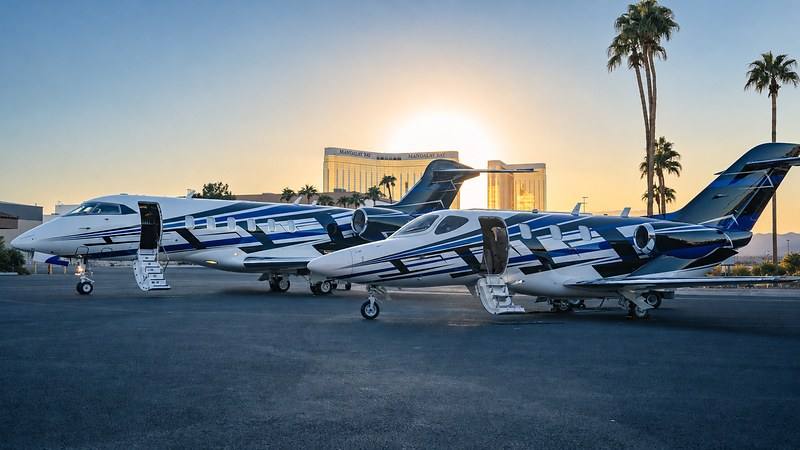
Thrive Aviation has released the first photography of its new fractional ownership fleet: a HondaJet HA-420 and a Bombardier Challenger 3500 parked together at sunset in Las Vegas, both wearing the program’s custom livery of white with bold blue and black geometric striping. The image, published on October 15, is the first public look at the aircraft that will form the foundation of the fractional program Thrive is building with Arulean Air, a subsidiary of Honda Aircraft Company.
The structure behind the paint was set in September, when Thrive announced a strategic partnership with Arulean Air and a minority investment by Arulean in Thrive. Under the arrangement, Arulean Air acquires aircraft for the fractional fleet while Thrive operates and manages the program, from client relationships to flight operations. September coverage of the launch reported that the first two aircraft had already been received, with a Challenger 3500 identified as the first fractional aircraft delivered.
Thrive’s published program materials, as reported by AirGuide, put the HondaJet 420 Series offering at five passengers, aimed primarily at shorter regional trips, with range varying by HA-420 variant from 1,212 to 1,547 nautical miles and a cruise speed of 422 knots. The Challenger 3500 covers the longer missions, with a range of about 3,400 nautical miles as listed for the type. The spread between the two types is the program in miniature: most fractional flying is regional, and the expensive hours are the long ones.
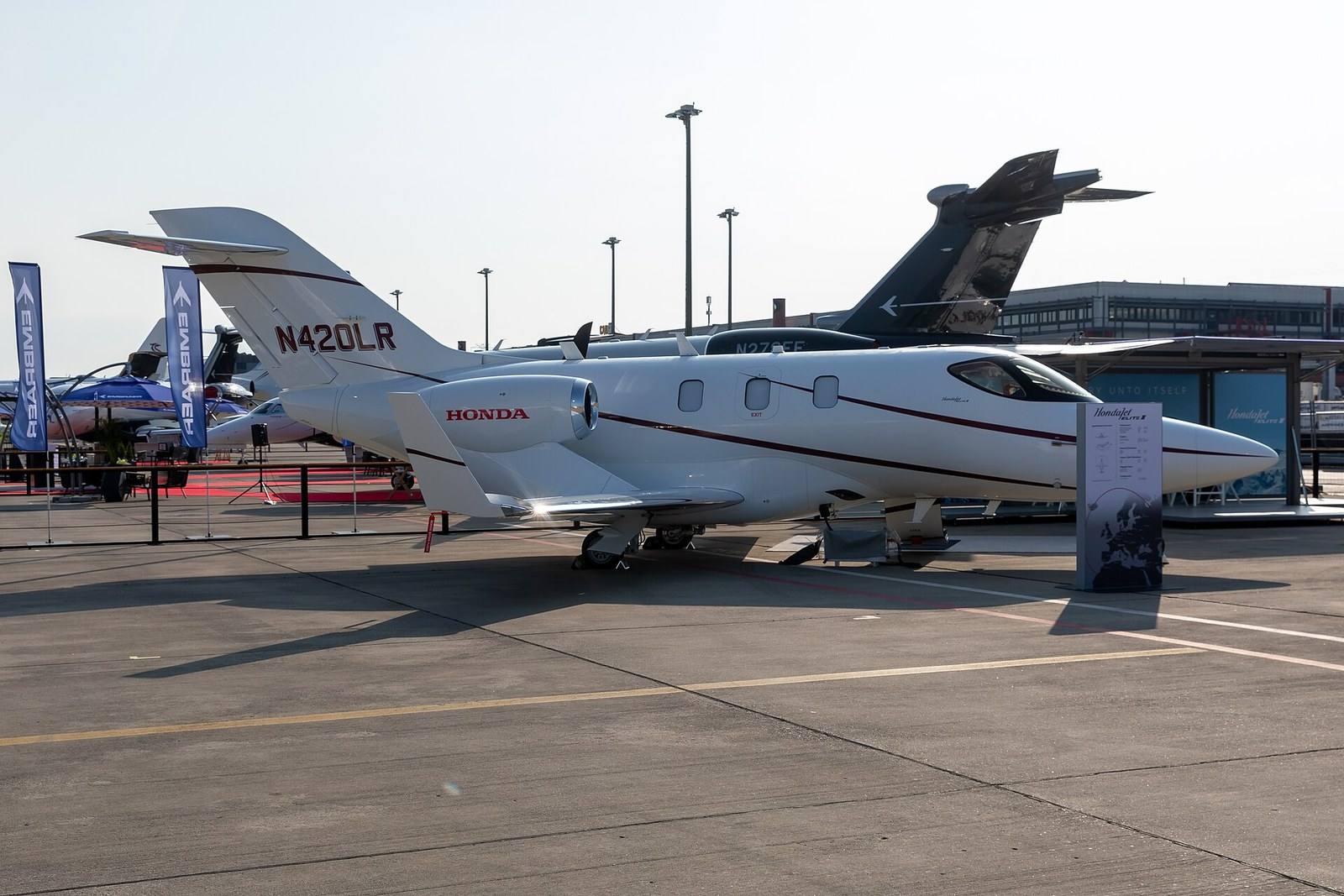
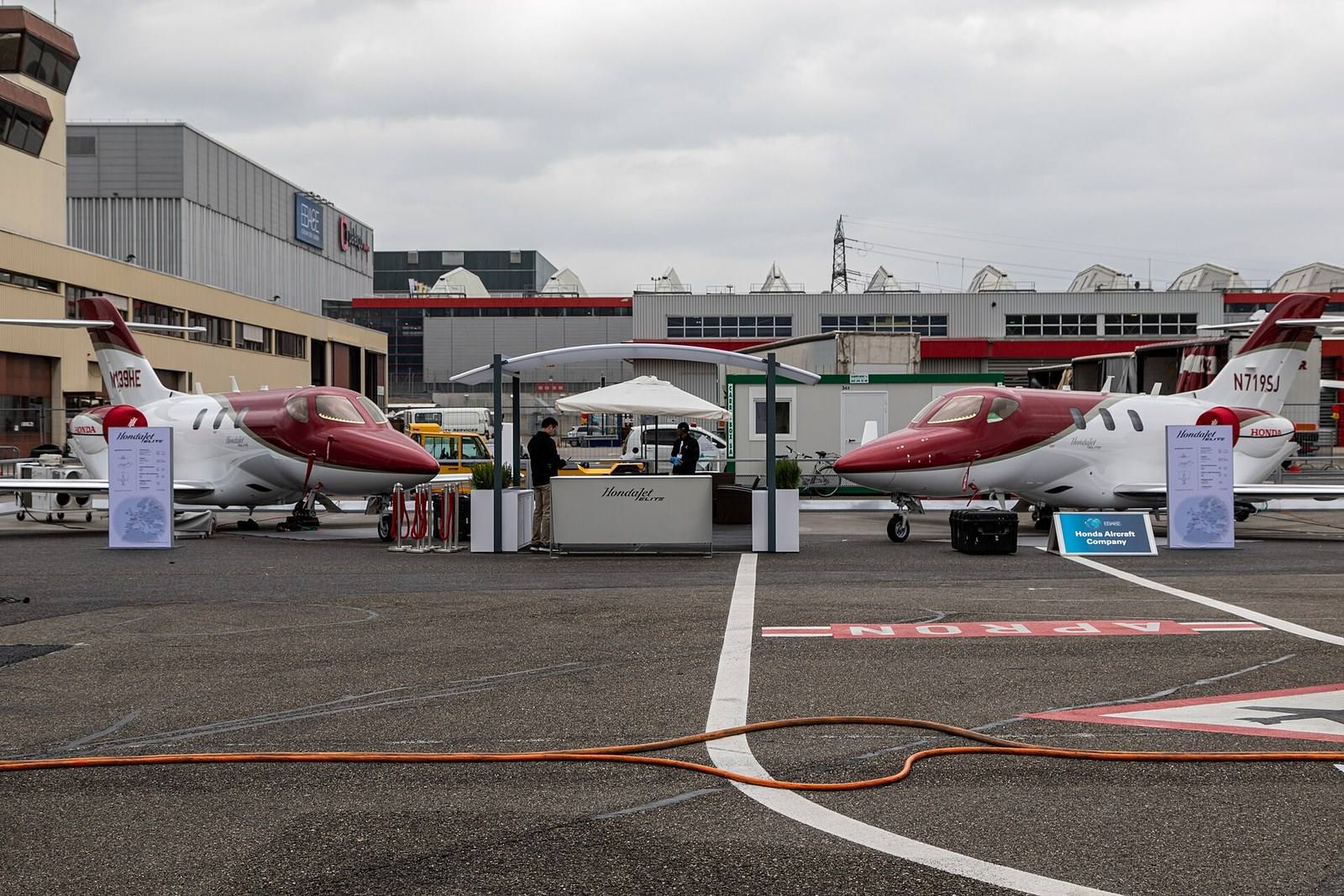
Two aircraft, two missions
The pairing is deliberate. The HondaJet HA-420 brings efficiency, technology and performance to regional travel, in Thrive’s description, while the Challenger 3500 provides the cabin space and range required for longer trips with more passengers aboard. Owners are to be matched with the right aircraft for each mission rather than tied to a single type, and the program is designed to draw on Thrive’s existing operating platform and fleet of more than 30 aircraft for additional flexibility as travel needs change.
The growth arithmetic in the release is specific: Thrive anticipates adding approximately four to six HondaJet HA-420s and two to four Challenger 3500s annually as the fractional owner base and fleet grow, on a platform the companies describe as designed to scale significantly over the coming decade. No share prices, hourly rates or contract terms have been published. The advance preview registration offered to prospective owners is stated to be for informational purposes only, and not an offer to sell an ownership interest.
Fractional ownership sits between charter and whole-aircraft ownership: customers buy a share in a fleet and draw flight time against it, while the operator handles crewing, maintenance and scheduling. Jet & Travel’s explainer on jet cards, fractional ownership and charter economics sets out how the models compare. What distinguishes the Thrive structure is the supply side of the fleet: the aircraft are acquired by Arulean Air, a subsidiary of the manufacturer of one of the two types, which also holds a minority stake in the operator running the program.
“We have spent the last eight years building the operating platform, infrastructure and client relationships that make this next chapter possible,” said Curtis Edenfield, co-founder and chief executive officer of Thrive Aviation.
Next stop, the Henderson ramp
Both aircraft will be on static display at Henderson Executive Airport during NBAA-BACE, at position AC05, with the Thrive team at booth 4271 in the West Hall of the Las Vegas Convention Center, from October 20 to 22. Thrive, founded in 2018 and headquartered in Las Vegas, operates charter, aircraft management, jet card and maintenance businesses on a fleet of more than 30 aircraft, and describes itself as one of the world’s top 10 largest private jet operators. The fractional program is the company’s move from operating other people’s aircraft to selling shares in its own fleet, with a manufacturer’s subsidiary buying the jets. The livery photograph is the opening statement; the sales conversation starts on the ramp next week.
The livery is doing strategic work as well. Fractional fleets have traditionally worn anonymous paint, the better to feel like the owner’s own aircraft. Thrive has chosen the opposite: a shared, recognizable scheme across two very different aircraft, closer to an airline identity than a private one. It signals that the company expects the fleet to be seen, photographed and compared, starting with the two aircraft on the Henderson ramp, and that it is selling a program, not just hours.
Photography: Thrive Aviation