There are three mainstream ways to fly privately without owning an airplane: on-demand charter, jet cards, and fractional ownership. Business Jet Traveler's long-standing rule of thumb maps them to annual hours: up to 25 hours calls for charter; 25 to 50 hours is the sweet spot for jet cards; above 50 hours a year, fractional ownership begins to make sense. The logic is straightforward. Many cards are sold in minimum denominations of 25 hours or face values of about $100,000, putting them beyond infrequent flyers, while 50 flight hours per year is a one-sixteenth share, generally the smallest fraction sold. But treat the rule as a starting compass, not a law: some travelers hold a share, a card, and use charter too, choosing mission by mission, and the lines between the three offerings have blurred considerably.
On-demand charter: pay per trip
Charter is the pay-as-you-go model. You book a specific trip, the operator quotes the flight, and you pay for the trip, with no deposits, acquisition costs, or membership fees. Flights are arranged through operators, who manage the aircraft, crew, and maintenance and are licensed under Part 135 of the Federal Aviation Regulations, or through brokers, who source aircraft from multiple operators but are not themselves licensed or regulated. Many operators hold third-party safety audits such as ARGUS Gold or Wyvern Wingman certifications, and Business Jet Traveler advises confirming what any operator's ratings actually mean before you book.
On a per-hour basis, charter typically costs less than fractional and even less than a jet card, making it usually the most economical way to access a business jet short of owning a heavily flown airplane. The floating-fleet model, in which charter aircraft need not return to a home base, makes true one-way pricing possible, and Business Jet Traveler notes that round-trip charter fares remain one of business aviation's great bargains, while jet cards' one-way pricing model can penalize round-trip travelers. The trade is certainty: charter offers no guaranteed availability, though with the possible exception of peak-demand periods, quality lift is rarely hard to find. Quoted prices also need scrutiny. The 7.5 percent federal excise tax on US domestic flights is not included in every quote, fuel surcharges may not appear in estimates, and many providers charge minimum daily flight times of one to two hours. Catering, crew overnights, de-icing, and ground transport may be extra.
Charter suits occasional flyers under roughly 25 hours a year, travelers whose passenger counts and distances change trip to trip (you can right-size the aircraft each time), and those based near a business aviation hub, where abundant local lift keeps quotes keen. Flexible schedules and bargain hunting on empty legs compound the savings. Where it fits poorly: regions with little based lift, and peak periods when aircraft are scarce.
Jet cards: prepaid access at fixed rates
A jet card is a debit-style prepaid program: you advance funds or hours, then draw down at a preset hourly rate. Cards are typically sold in hour blocks, such as 25 hours, or dollar amounts, such as $100,000, and the more you advance, the lower the hourly rate. Hour cards suit travelers who fly one category of aircraft; dollar-value cards suit those who want fleet-wide access across categories. The proposition mimics fractional ownership, one-way pricing, guaranteed access, concierge service, without the capital investment or long commitment.
The economics are published and current. Private Jet Card Comparisons' Q2 2026 analysis of more than 80 providers and 1,000-plus options puts average published hourly jet card rates at: turboprops $6,271; very light jets $7,688; light jets $8,456; midsize jets $9,557; super-midsize jets $12,526; large-cabin jets $15,236; and ultra-long-haul jets $19,202. The overall average is $11,314 per hour. Those figures include base rate, fuel surcharges, and the 7.5% federal excise tax, are quoted for occupied hours only, and cover cards with guaranteed availability and rates. Rates dipped 1% quarter over quarter, rose 0.4% year over year, and sit 27.7% above pre-COVID Q4 2019. The guide notes these are published rates and do not reflect the steady flow of card promotions, typically worth mid-single-digit added value.
The fine print matters as much as the rate. Many cards have a finite life, typically one to two years, after which unused hours or dollars evaporate. Most programs specify peak, off-peak, and blackout dates with restricted access or surcharges. Cancellation policies vary, and international or peak-day bookings can require cancellation up to five days out. Service areas differ, with positioning fees beyond them. And a caution Business Jet Traveler stresses: the purchase price typically goes into the provider's general operating fund, not a segregated escrow account, so the deposit is only as safe as the provider's balance sheet. Review financials, check the FAA database for accidents or actions, and query consumer agencies before committing.
Jet cards suit flyers in the 25 to 50 hour band with reasonably predictable patterns, one-way-heavy itineraries, and a preference for rate certainty and short-notice access over the lowest possible hourly cost. Below that usage, the prepaid deposit sits partially unused; above it, fractional ownership starts to become competitive.
Fractional ownership: a deeded share of an airframe
Fractional ownership is the only one of the three in which you hold a legal ownership interest in a specific aircraft type. The math starts from 800 flight hours per year per aircraft: a one-sixteenth share buys 50 'occupied hours' annually, generally the smallest interest sold, scaling to one-eighth (100 hours), one-quarter (200 hours), and up to a full share (800 hours). You pay three separate line items: an upfront acquisition cost for the share, a fixed monthly management fee covering crew, insurance, hangar, and administration, and an occupied hourly rate for the direct costs of each flight, fuel, maintenance reserves, and crew.
Terms are typically five years. Programs may allow early termination from the 24th to 36th month at a cost, with the sooner exits priced higher. At term end, absent an extension, agreements require selling the share back to the program at its then residual value, plus a remarketing fee of about 7% and other payments. On pricing, honesty requires a caveat: the largest fractional providers do not publish share prices, and Business Jet Traveler notes that fractional companies are tightlipped about share costs. Treat any specific acquisition or monthly fee figure you encounter online as a reported estimate, not a published price. Depreciation is the structural risk: fractionally flown aircraft work hard, and the share's resale value at exit is not guaranteed.
The advantages are consistency at volume. For 50-plus hours a year, ideally 100 or more, with a stable home base and a preference for one aircraft type, the effective hourly cost can undercut cards and charter once amortized, and programs offer upgrade and downgrade rights across the fleet. You will rarely fly your exact tail, since your aircraft is working for other owners, and the crew will vary. Fractional suits high-utilization flyers with predictable missions who are comfortable locking capital into a five-year commitment and carrying depreciation risk.
The three models at a glance
| On-demand charter | No upfront deposit; pay per quoted trip. Typically the lowest per-hour cost. No guaranteed availability. Best under roughly 25 hours per year. |
|---|---|
| Jet cards | Prepaid deposit, typically 25-hour blocks or ~$100,000 face values, drawn down at fixed hourly rates. Guaranteed availability with call-out windows. Best in the 25 to 50 hour band. |
| Fractional ownership | Upfront share purchase plus monthly management fees and occupied hourly rates. Five-year terms; legal ownership interest with depreciation risk. Best above roughly 50 hours per year, ideally 100+. |
How to decide
Business Jet Traveler recommends starting with data, not a brochure. If you are new to private flying, begin with ad hoc charter and log everything: dates, lead times, passenger counts, distances, aircraft types, what worked and what did not. That record reveals whether you need round-trip economics, peak-day access, or consistent service more than raw savings.
Then interrogate the policies every provider shares in some form: peak, off-peak, and blackout dates; cancellation terms; service areas and positioning fees; trip or daily minimums; call-out times; and exactly what the price includes, especially the federal excise tax and fuel surcharges. Vet the provider's financial health, since card deposits and share capital sit with the company. And remember the caveat behind the hour thresholds: the models are not a ladder you climb. Many experienced flyers hold a share for their core missions, keep a card for overflow, and charter the odd trip that fits neither, because the cheapest model in the abstract is rarely the cheapest for the trip in front of you.
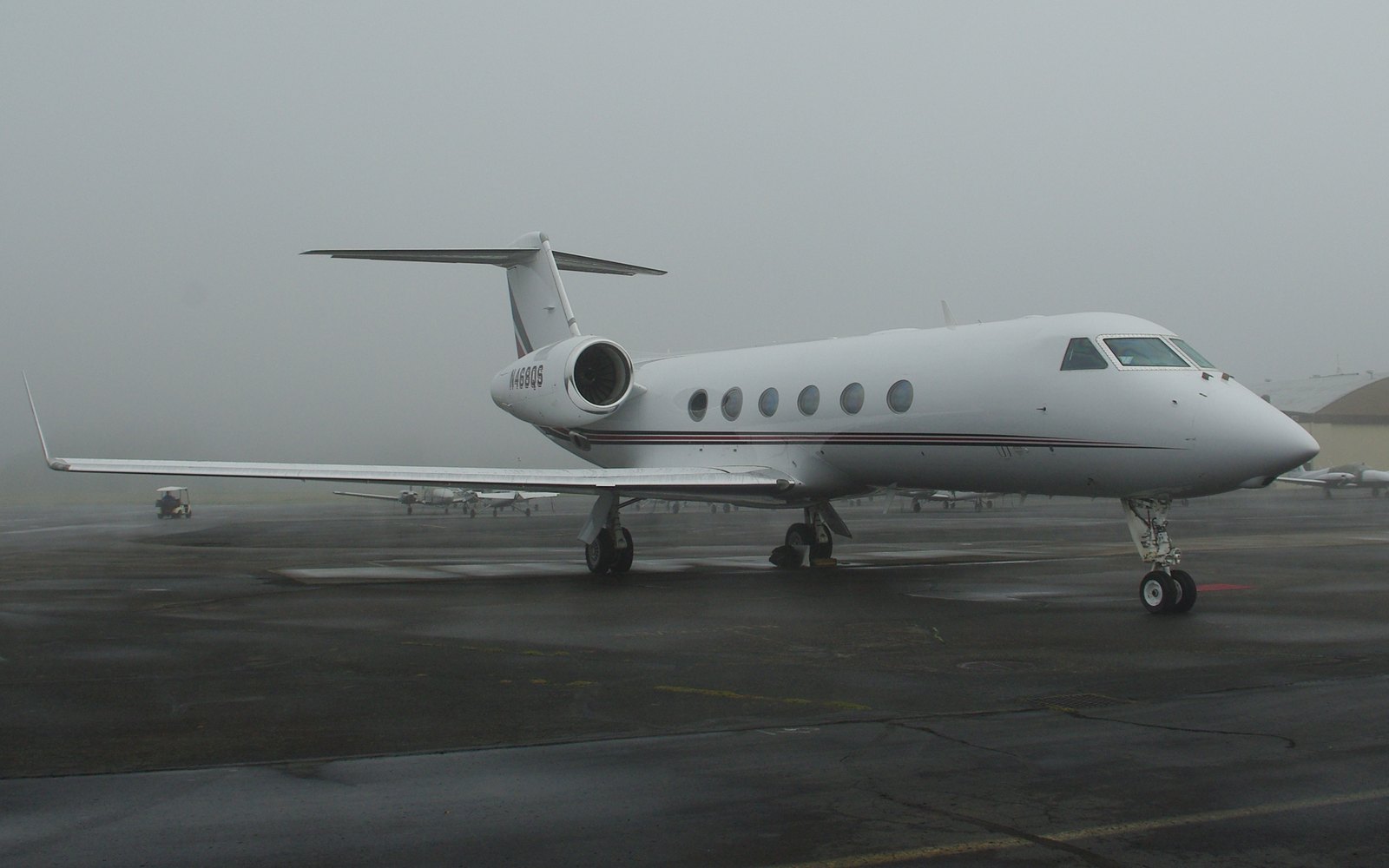
Photography: M.O. Stevens, CC BY-SA 3.0, via Wikimedia Commons