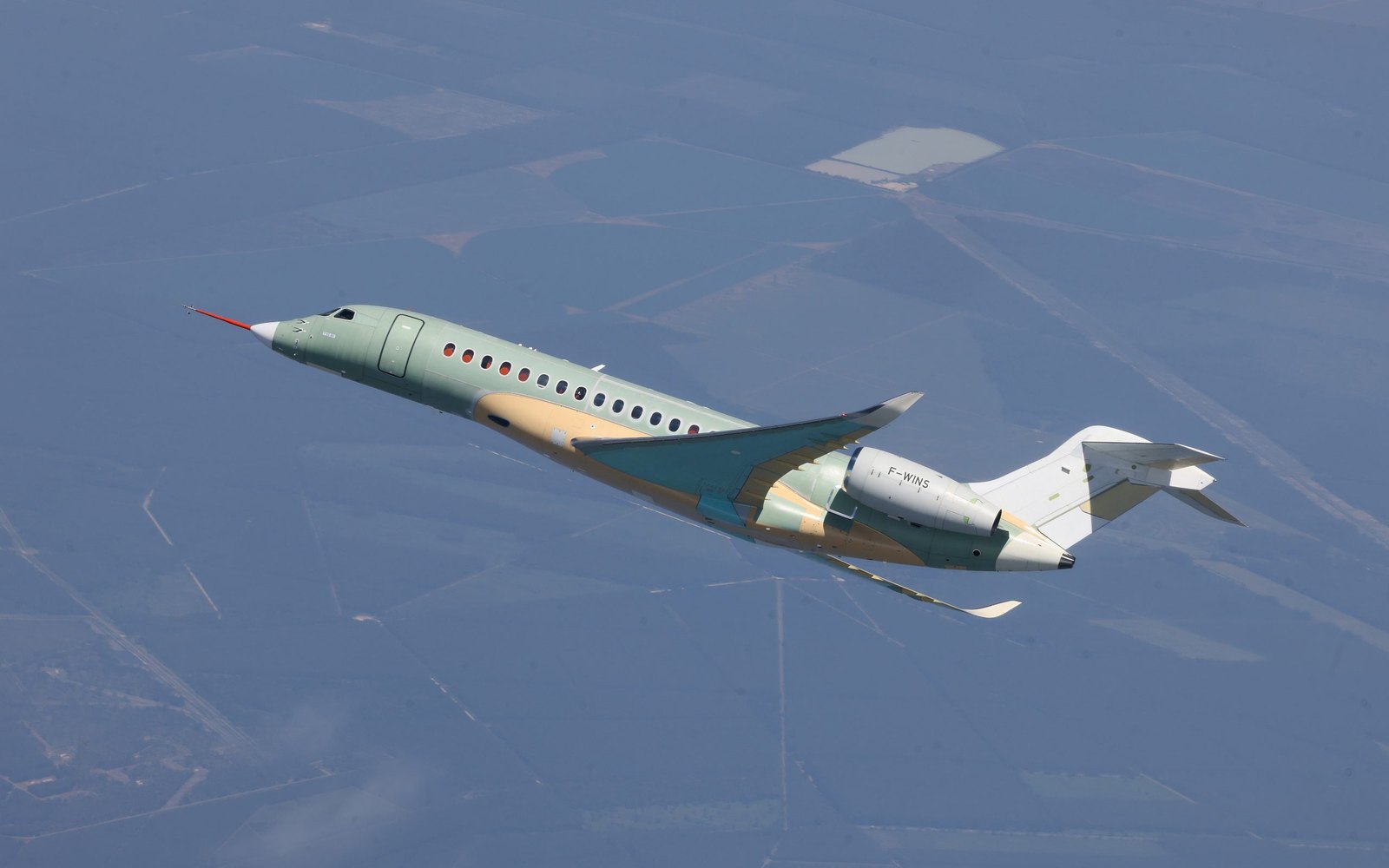
The Falcon 10X made its maiden flight on June 19, 2026, a two-hour, 30-minute flight from Bordeaux-Merignac that opened the flight-test campaign. Test pilot Sebastien Dupont de Dinechin and copilot Fabrice Dougnac took off from runway 23 at 11:10 a.m., evaluated handling qualities and systems at 15,000 feet, retracted the landing gear and all movable surfaces, climbed to 40,000 feet, and accelerated to Mach 0.82 before landing at 1:40 p.m.
The aircraft had been rolled out on March 10, 2026, in a ceremony at the new final-assembly building at Bordeaux-Merignac before 400 customers, partners, and aviation leaders; the prototype carries registration F-WNXT. A second test aircraft was nearing completion at first flight, and a third was being outfitted with a full interior for systems, cabin functional, and reliability testing.
The schedule, revised
Dassault's July 22, 2026 half-year financial release states the program was rescheduled and entry into service is planned for 2029. FlightGlobal reported that the aircraft will not enter service before 2029, citing tighter certification requirements imposed after the 737 MAX crisis. The timeline has now slipped twice: originally targeted for 2025, then 2027, and now 2029. The 2029 date is the current published target, not a certainty.
The aircraft, on paper
| Range | 7,500 nm (Dassault) |
|---|---|
| Maximum speed | Mach 0.925 (Dassault) |
| Engines | Two Rolls-Royce Pearl 10X, 18,000+ lb thrust each |
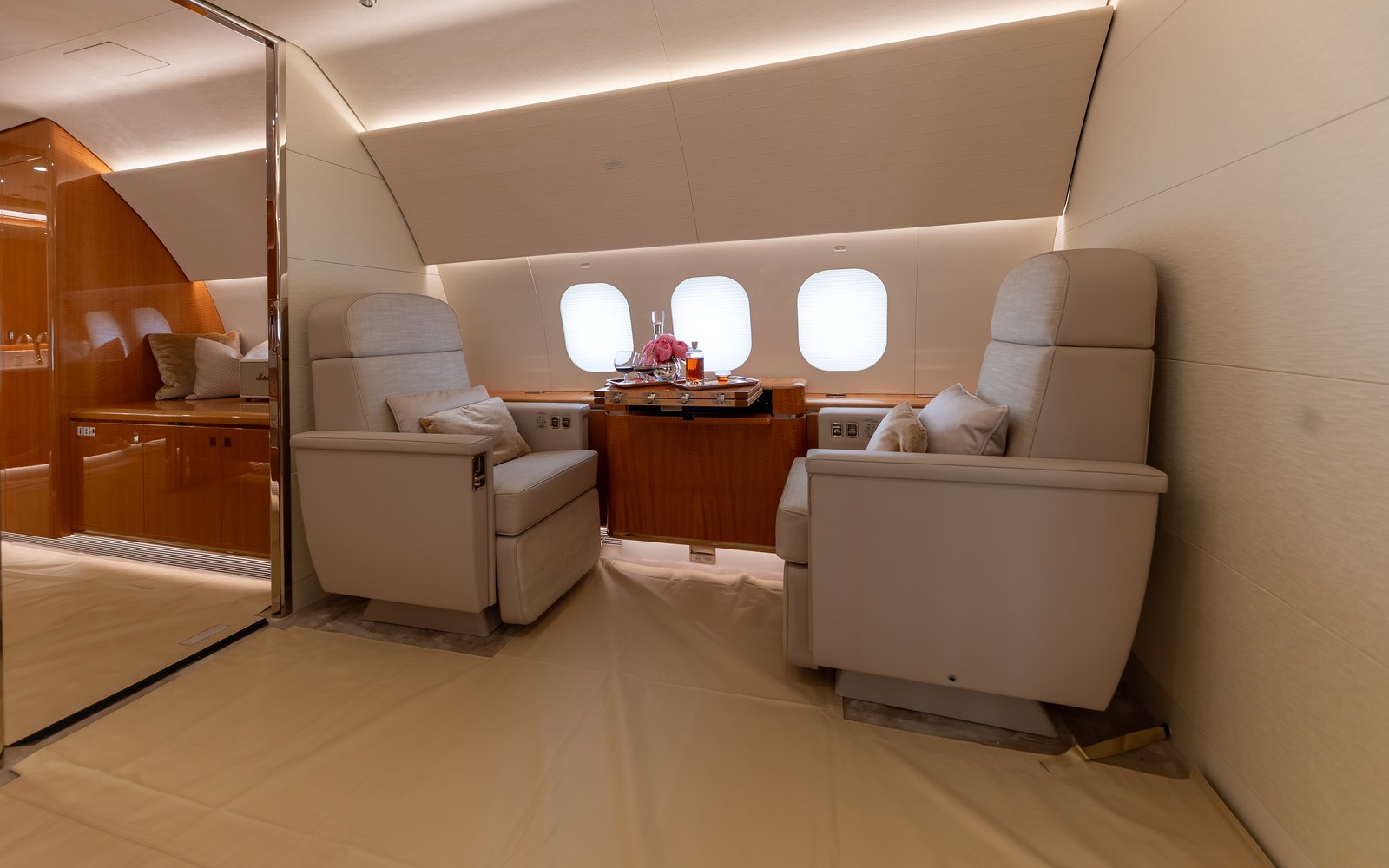
| Cabin width / height | 109 in (2.77 m) / 80 in (2.03 m) |
| Windows | 38 extra-large, described as nearly 50 percent larger than the Falcon 8X |
| Cabin altitude at 41,000 ft | 3,000 ft, 100 percent fresh air (Dassault) |
The 10X is a clean-sheet design, and its cabin dimensions show that comfort is now a headline competitive battleground even on new programs. What remains is the long work of certification: a first flight is a beginning, not a verdict.
Photography: Dassault Aviation