On October 1, 2026, SkyDrive announced a feasibility study with Osaka Metro, Kansai Electric Power, Chodai Co., and the Airport Environment Improvement Foundation to repurpose Osaka City’s 146 rooftop emergency landing sites as eVTOL vertiports. The project sits inside Japan’s Cabinet Office Super City Initiative, and it takes aim at the constraint that has quietly decided the fate of more than one urban air mobility plan: in a dense city, there is nowhere to land.
The 146 sites already exist. They are the rooftop emergency landing zones marked with an H on buildings over 100 meters tall, built to local fire safety rules with reinforced flooring, fire suppression systems, and lighting. Today they are reserved for disaster relief. The study asks whether they can do double duty as alternate vertiports: backup landing points for eVTOL aircraft that cannot reach their planned destination, the safety net a commercial network needs.
What the study will test
The work plan is specific. The partners will verify surrounding airspace and obstacle limitation surfaces against Civil Aeronautics Act standards, survey building-induced wind and model noise during takeoff, landing, and flight, assess floor load capacity for aircraft landings, map passenger movement during diversions, plan for moving an aircraft after a mechanical failure, evaluate charging infrastructure and power equipment, and cost the whole conversion. They will also consult the Osaka Municipal Fire Department to write coexistence rules balancing the sites’ original disaster-response purpose with daily eVTOL operations.
Osaka Metro leads the project, coordinating target facilities and operating conditions; SkyDrive designs the survey and drafts operational requirements; Kansai Electric Power handles electrical and charging feasibility; Chodai runs obstacle simulations; the Airport Environment Improvement Foundation covers noise. Osaka Prefecture and Osaka City provide administrative support and regulatory reform under the National Strategic Special Zone framework.
The 2028 target
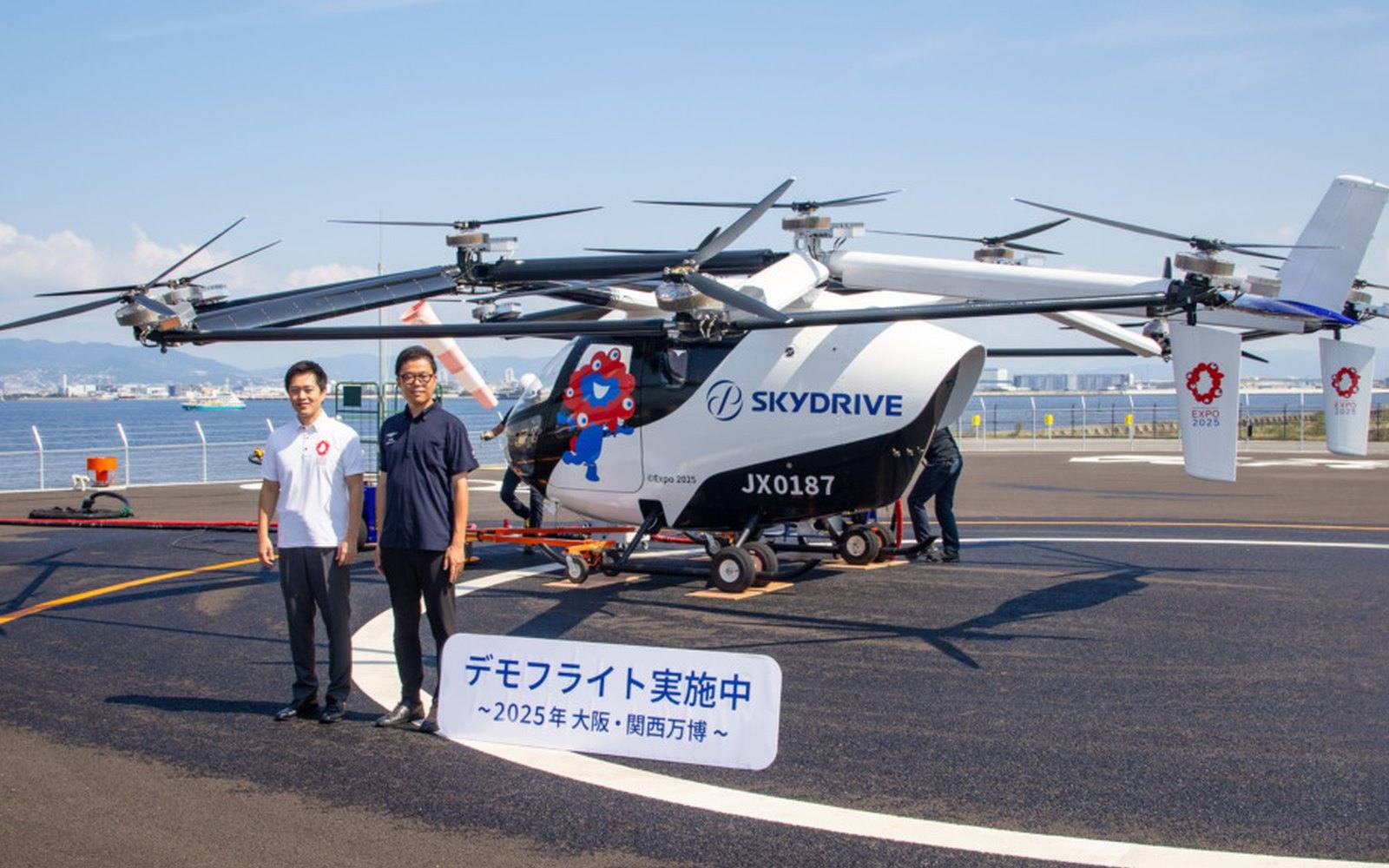
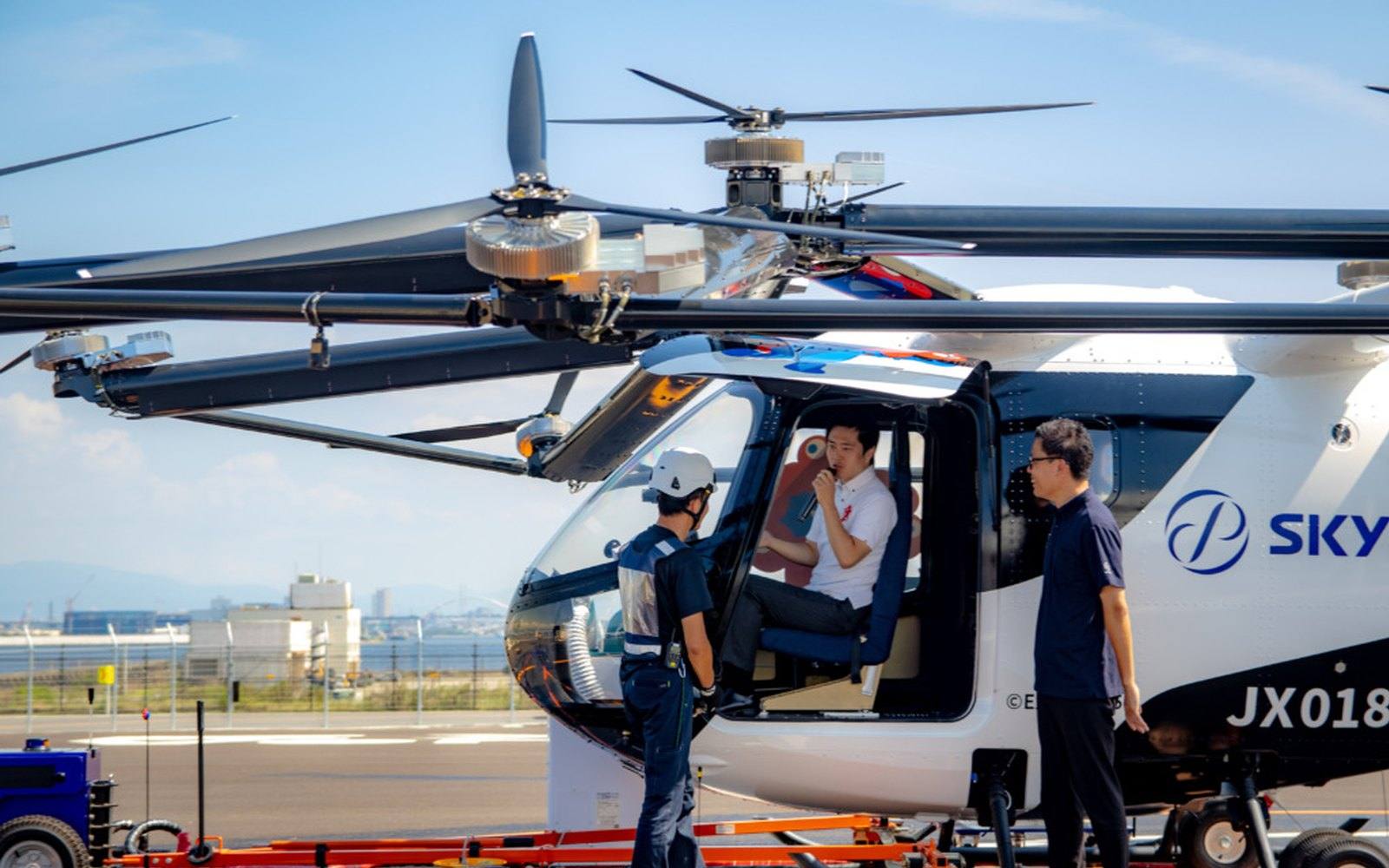
SkyDrive and Osaka Metro are working toward commercial eVTOL services in Osaka around 2028. The study builds on the Expo 2025 Osaka demonstration program, where SkyDrive flew its SD-05 from the Expo venue’s vertiport over Osaka Bay. In September 2025 the company moved to the Osakako Vertiport, built and operated by Osaka Metro in a densely populated neighborhood, for a further series of public flights from September 14 to 23, preceded by familiarization flights from September 6: 18 days of urban flying in total, which SkyDrive describes as the most extensive eVTOL development and testing program ever conducted in an urban setting. The choice of a residential neighborhood was deliberate, a step toward public acceptance of the aircraft in the places it would actually fly.
The company’s context: SkyDrive began testing eVTOL prototypes in 2014, flew Japan’s first crewed eVTOL in 2019, and started production of the SD-05 in March 2024 at a plant owned by Suzuki Motor Corporation, its official production partner. It is working with civil aviation authorities in Japan and the US toward type certification, aiming to bring the aircraft into service in 2028. The company is headquartered in Toyota, Aichi Prefecture, and led by chief executive Tomohiro Fukuzawa.
The strategic distinction matters. Most eVTOL developers are building inter-city links between airports and suburban heliports. SkyDrive is aiming at daily intra-city travel in central Osaka with a compact aircraft, and the rooftop study is the infrastructure bet behind that: no new land, no new construction, just the conversion of emergency infrastructure that already sits on 146 rooftops.
The rooftop study is one of two parallel commercial tracks. On October 6, SkyDrive announced a separate joint initiative with MUFG Bank and other Kansai enterprises across transportation, aviation, infrastructure, energy, tourism, and financial services to evaluate the commercial deployment and operational framework for eVTOL aircraft in Western Japan. The initiative was presented at the Global Startup EXPO 2026 in Osaka with former prime minister Fumio Kishida and Osaka governor Hirofumi Yoshimura present. The message of the week from Osaka is that the region has moved from technical validation to commercial integration, and the questions left are operational, not aerodynamic.
The honest caveat: this is a study, not a build. No rooftop has been converted, no commercial permit has been issued for the sites, and the regulatory framework for commercial use of disaster-relief landing zones is still being written. What the announcement changes is the shape of the question. Osaka may not need to build a vertiport network if it already has one, a hundred meters up.
Photography: SkyDrive