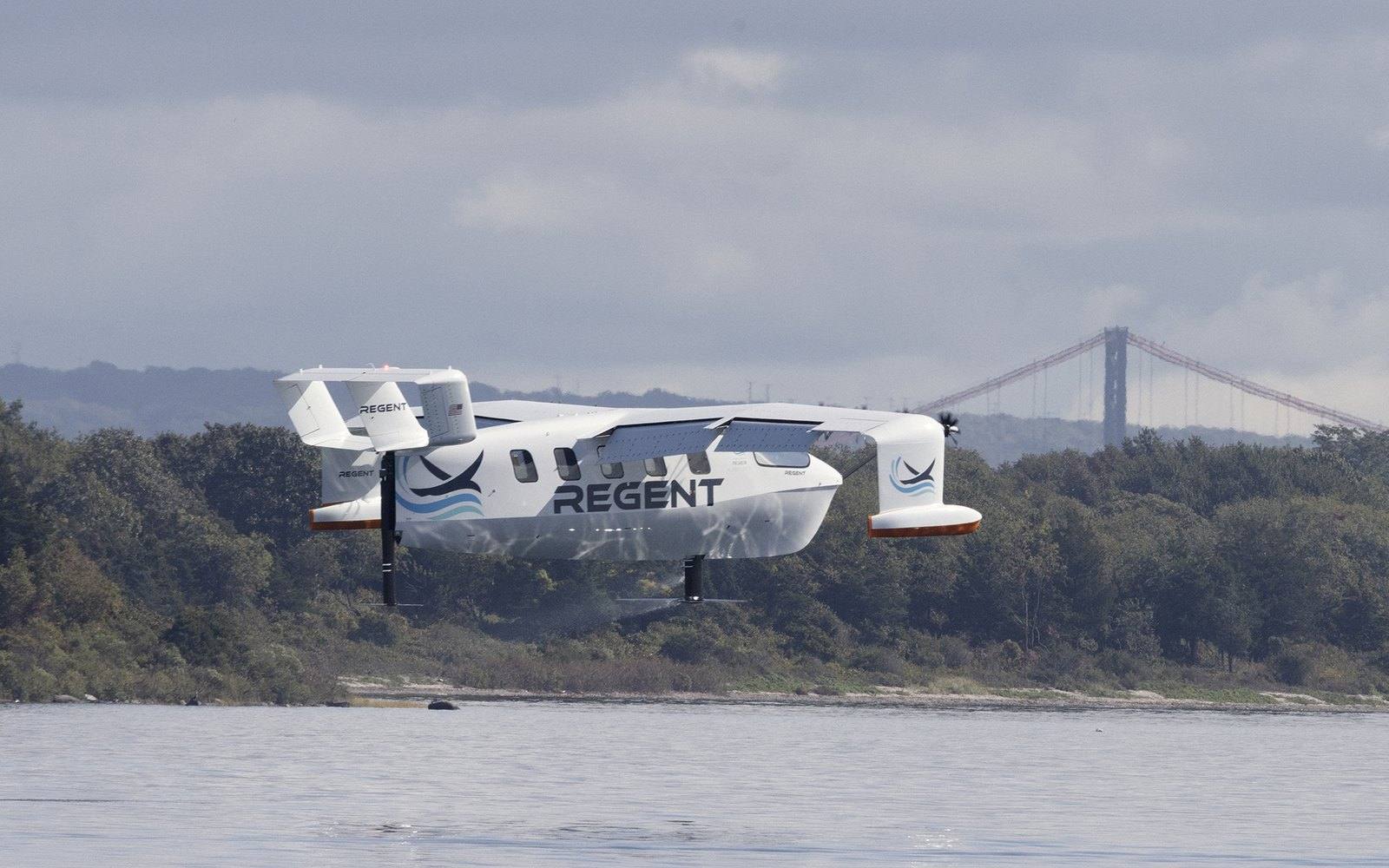
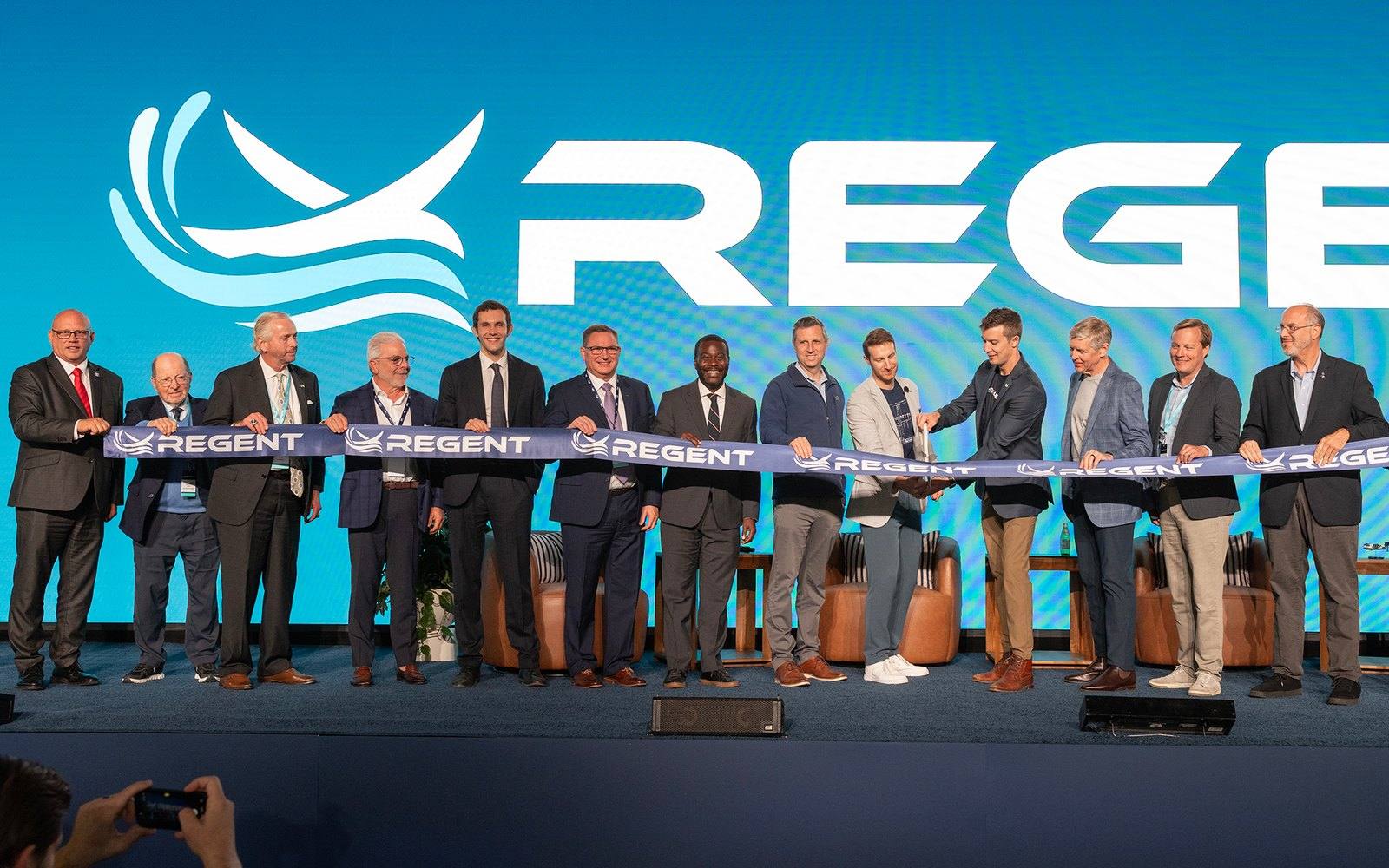
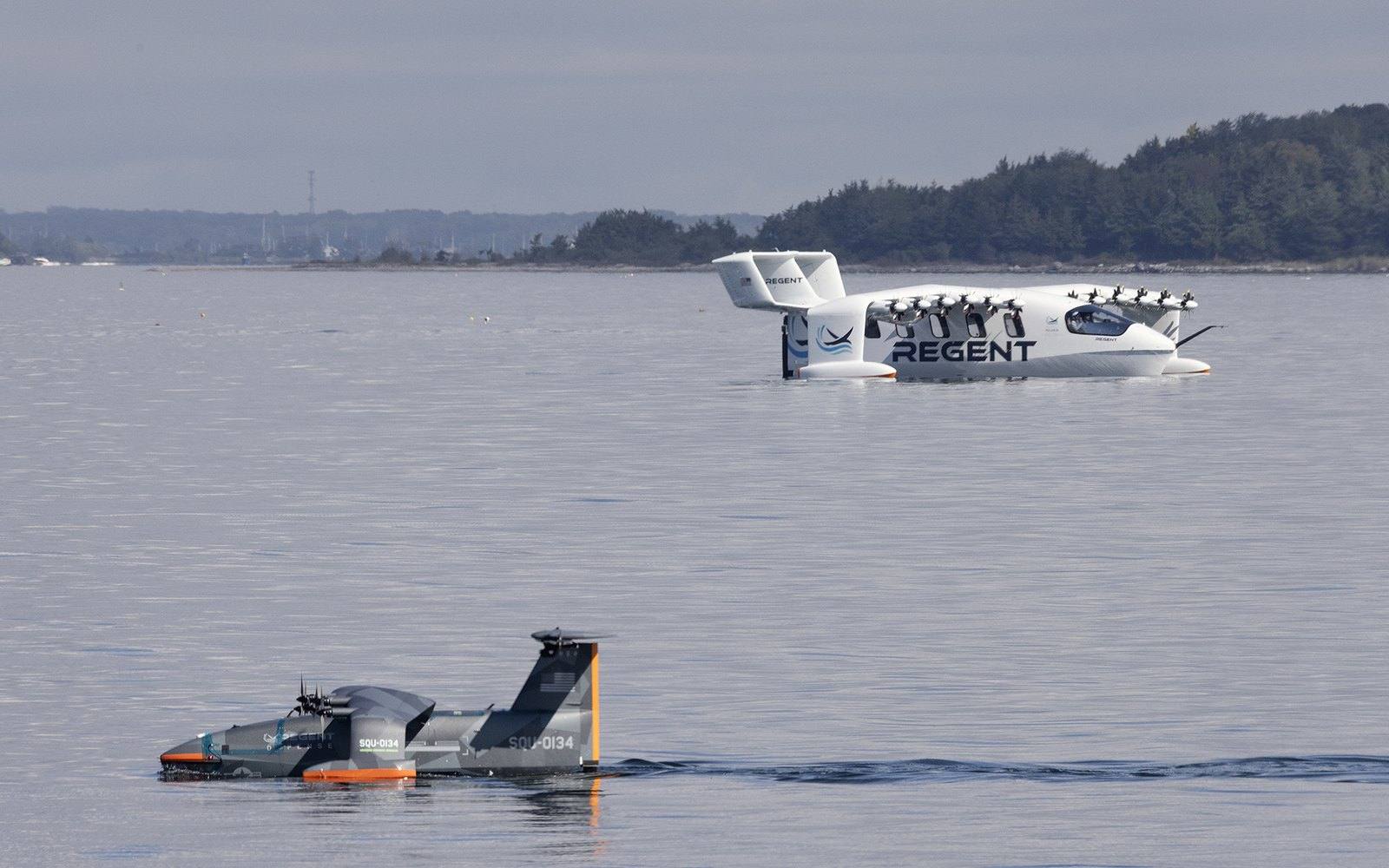
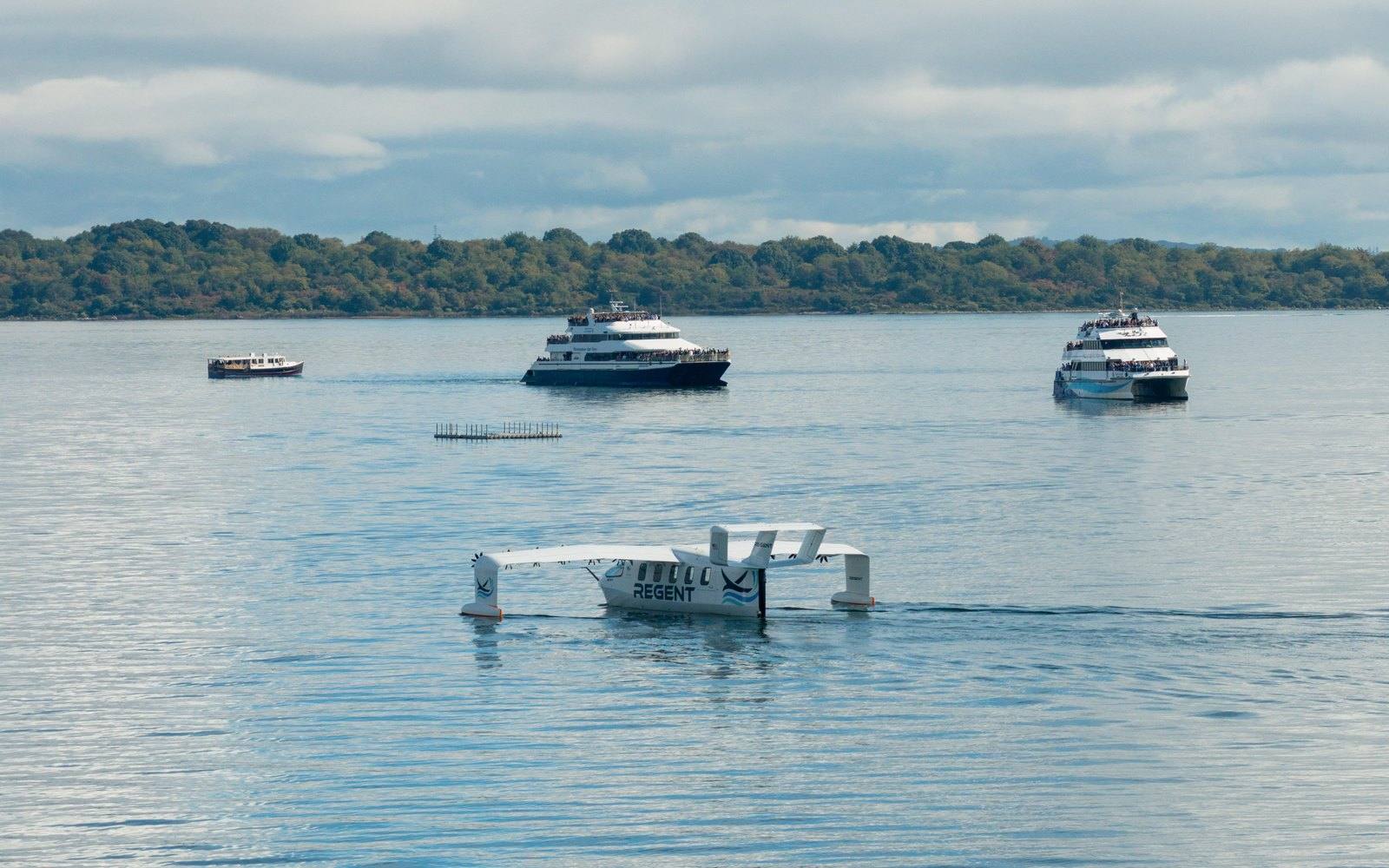
On September 30, 2026, REGENT Craft opened the world’s first Seaglider Manufacturing Facility at 1 Seaglider Way in Quonset Business Park, North Kingstown, Rhode Island, and used the occasion to fly its full-scale Viceroy prototype in public for the first time. More than 600 guests were ferried out onto Narragansett Bay to watch the 12-passenger electric craft demonstrate its three modes: float, foil, and fly.
The public demonstration was the prototype’s fifth flight, and it came less than a month after the first ground-effect flight. On September 2, two captains flew the Viceroy for 30 seconds at 33 feet above Narragansett Bay, covering 1,956 feet: the first human-crewed flight of a seaglider, and the largest all-electric wing-in-ground-effect craft to fly with people aboard.
Three modes, one trick
The Viceroy works as a boat, a hydrofoil, and a ground-effect aircraft. It floats on its hull at low speed, rises onto hydrofoils to clear the waves, then lifts to fly within about one wingspan of the surface, where the wing traps a cushion of air and generates far more lift for the same power. Twelve electric motors line the leading edge of the wing, governed by a triple-redundant fly-by-wire system.
Because the craft never climbs out of ground effect, it is regulated in US waters by the Coast Guard as a vessel, not by the FAA as an aircraft, and it is operated by certified mariners rather than pilots. REGENT describes the production Viceroy as carrying 12 passengers and two crew at up to 180 mph over routes up to 180 miles, with a cargo alternative of up to 3,500 pounds. Chief executive Billy Thalheimer has described the Narragansett to New York run as about an hour by seaglider.
From prototype to production
The 255,000-square-foot plant is designed as the global production hub for both the Viceroy and the autonomous Squire, with structural assembly, wing and hydrofoil integration, battery and systems installation, and water-based test and acceptance operations with direct waterfront access. REGENT says the layout supports phased capacity increases to a rate of 75 Viceroy vessels and 300 Squire drones per year.
The money is in place. REGENT closed a $240 million Series B round in August, bringing total funding raised to $340 million, from investors including AE Ventures, Mare Liberum, Valor Equity Partners, Lockheed Martin, Japan Airlines, and Abu Dhabi’s Strategic Development Fund, with manufacturing financing from Erebor Bank. The company cites an expanded $20 million US Marine Corps contract alongside a commercial order book spanning six continents.
The jobs pitch is local. REGENT has pledged up to 750 jobs over the next decade and says it has already reinvested $71.5 million into the Rhode Island economy. The company’s vice president of manufacturing told local press the plant could add as many as 400 jobs by the end of next year.
The guest list read as a coalition. US Representatives Gabe Amo and Seth Magaziner attended alongside Breeze Airways founder David Neeleman, executives from Japan Airlines, the oneworld alliance, and Alaska Airlines, and a striking number of retired flag officers, including former Marine Corps commandant General Robert Neller and former Vice Chief of Naval Operations Admiral William Moran. The defense interest is contractual: REGENT cites an expanded $20 million US Marine Corps contract for the Viceroy platform, while the smaller autonomous Squire drone draws separate military attention.
Why it matters for coastal travel
The seaglider’s bet is that coastal corridors do not need runways. A craft that takes off and lands from the water, operates from existing docks, and certifies as a vessel sidesteps two of the scarcest inputs in short-haul aviation: airport slots and type-rated pilots. The name itself is an acronym: Regional Electric Ground effect Nautical Transport.
The honest caveats belong in the frame. The Viceroy remains a prototype with five flights to its name, each measured in seconds, and commercial service is more than a year away at best. The order book is real but undisclosed in size. And the regulatory shortcut that makes the schedule possible, Coast Guard certification as a vessel, is untested at commercial passenger scale.
“We proved the technology and the demand; now we build,” said Billy Thalheimer, co-founder and chief executive of REGENT, in the company’s announcement.
If the factory hits its dates, the first paying passengers could board a production Viceroy late next year. For now, Rhode Island has the factory, the prototype, and a few seconds of flight over Narragansett Bay to show for the effort, plus the rarest thing in advanced aviation: a schedule that still looks achievable.
Photography: REGENT