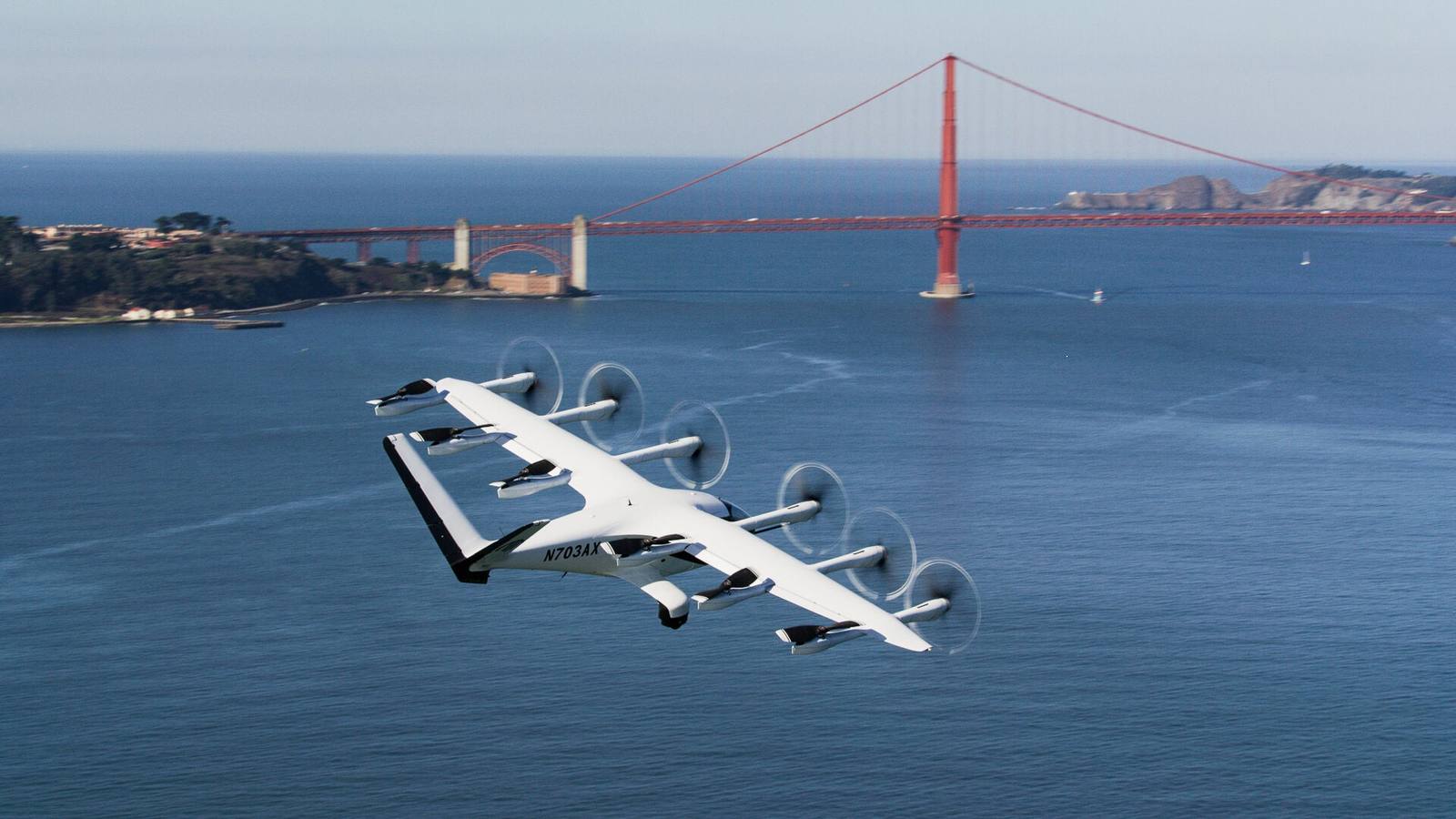
The aircraft that spent last week over San Francisco Bay was not selling tickets, and Archer Aviation is careful to say so. What it was doing, over several days of piloted flying announced by the company on October 19, was rehearsing an argument: that the Bay Area's defining journey, the crawl between its cities, can be replaced by a short electric flight. Archer's Midnight air taxi made multiple trips around the Bay, taking off and landing at Oakland International Airport, at the end of a three-day journey that began in Salinas and stopped at Hollister, San Martin, San Jose, Mountain View and Hayward on the way north. Across the tour the aircraft covered more than 200 miles, visited seven cities and reached a top speed of 131 mph, figures the company published in its release.
The number that will travel furthest is ten minutes. Archer puts the airborne time from Oakland International to the Marina District at about ten minutes, against a road journey it says routinely exceeds an hour in traffic. The figure deserves its precise shape. Flying Magazine, citing FlightAware tracking data, reported that the aircraft, registered N703AX, made three flights over the Bay on Thursday, each lasting about 20 minutes, and that the prototype did not land in the Marina District: it took off and landed on the runway at Oakland. The ten minutes is therefore the airborne time to cross to the Marina side of the Bay and the heart of the city's northern waterfront, flown as an out-and-back demonstration from Oakland, not a point-to-point passenger run. Even read strictly, it is a striking compression of a journey that defines Bay Area frustration.
Why fly here at all
The point of the exercise, in Archer's telling, was the airspace. The Bay Area holds three international airports, San Francisco, Oakland and San Jose, in one of the busiest flight corridors in the country, and the tour's purpose was to show Midnight operating inside that complexity rather than above an empty test range. The Northern California flying followed a month-long tour leg and an appearance on September 22, when Midnight flew piloted demonstrations before tens of thousands of attendees at the 2026 California International Airshow. The flights were conducted in close coordination with the FAA and state and local partners, the company says.
Adam Goldstein, Archer's founder and chief executive, framed the week in the language of lost time. “The Bay Area is the innovation center of the world, but even here Americans lose multiple weeks a year sitting in traffic on bridges and highways,” he said in the company's release. “Flying Midnight across multiple cities in Northern California shows we can connect communities with no roads, no traffic, and no emissions in minutes instead of hours. That's the future we're working towards bringing to the Bay Area, Los Angeles and cities across the country.”
The Napa line on Archer's map
For readers of this publication, the significant document is not this week's release but one from June 20, 2024, when Archer announced its planned San Francisco Bay Area air mobility network: five takeoff and landing locations, in South San Francisco, Napa, San Jose, Oakland and Livermore, intended to replace drives of one to two hours with flights of roughly 10 to 20 minutes. To anchor the network, Kilroy Realty signed a memorandum of understanding identifying Kilroy Oyster Point, its 50-acre waterfront campus in South San Francisco, as a hub, with a vertiport to be explored there and further vertiport locations planned at Napa, San Jose, Oakland and Livermore, where Archer said it had existing relationships with infrastructure and operations partners.
That plan is the honest basis for the Napa angle, and its limits should be stated plainly. Archer has announced an intention to include Napa in a future Bay Area network; it has not announced a Napa vertiport site, a start date, or a fare, and nothing in this week's flying changes that. What the demonstration does change is the texture of the promise. A Napa to San Francisco flight of the kind the 2024 network describes would put wine country inside the same ten-to-twenty-minute geometry the company has now flown, in public, over the Bay itself. For an industry whose visitors routinely lose an afternoon to Highway 29 and the Bay Bridge, that is a material prospect. It remains, today, a prospect and not a service.
Midnight, published specifications
| Aircraft | Archer Midnight, piloted eVTOL air taxi |
|---|---|
| Passengers | Four, plus a pilot |
| Propulsion | 12 propellers: six tilting, six fixed for vertical flight; six independent battery packs |
| Design cruise speed | Up to 150 mph (manufacturer figure) |
| Design range | Up to 100 miles, optimised for back-to-back trips of 20 to 50 miles |
| Turnaround charge | About 10 minutes between flights (manufacturer figure) |
| Bay Area demonstration, October 2026 | Top speed 131 mph; more than 200 miles flown; seven cities in three days (Archer) |
The honest distance to a ticket
Midnight is not yet certificated by the FAA, and no passenger can buy a seat on one. The Bay Area flights were demonstrations flown as part of a test and showcase program that Aerospace Testing International notes has passed 400 test flights, and the road from here runs through certification and through the White House's eVTOL Integration Pilot Program, under which Archer says it is preparing to operate. The next stop on the tour is Los Angeles, where the company is also preparing for operations around the 2028 Olympic Games, for which it is the official air taxi provider. None of that comes with a Bay Area start date, and Archer offered none this week.
What the week established is narrower and, for that reason, more credible. An electric aircraft with a pilot aboard flew repeated circuits of one of America's most complicated pieces of sky, in view of the cities it proposes to connect, at speeds and times that match the company's published claims. The argument for the air taxi has until now been made mostly in renderings. Over San Francisco Bay, for three days in October, it was made in the air.
Photography: Archer Aviation