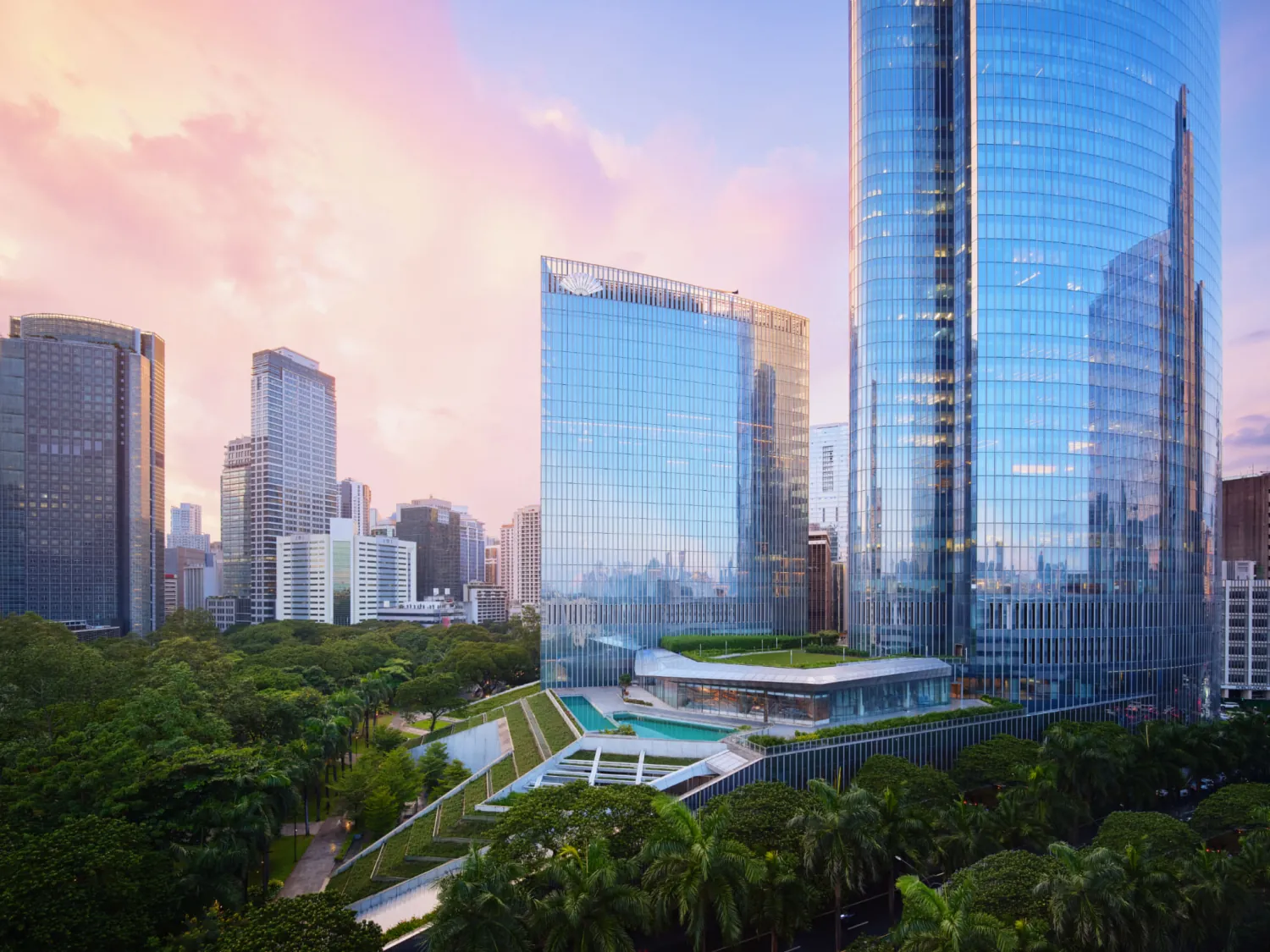
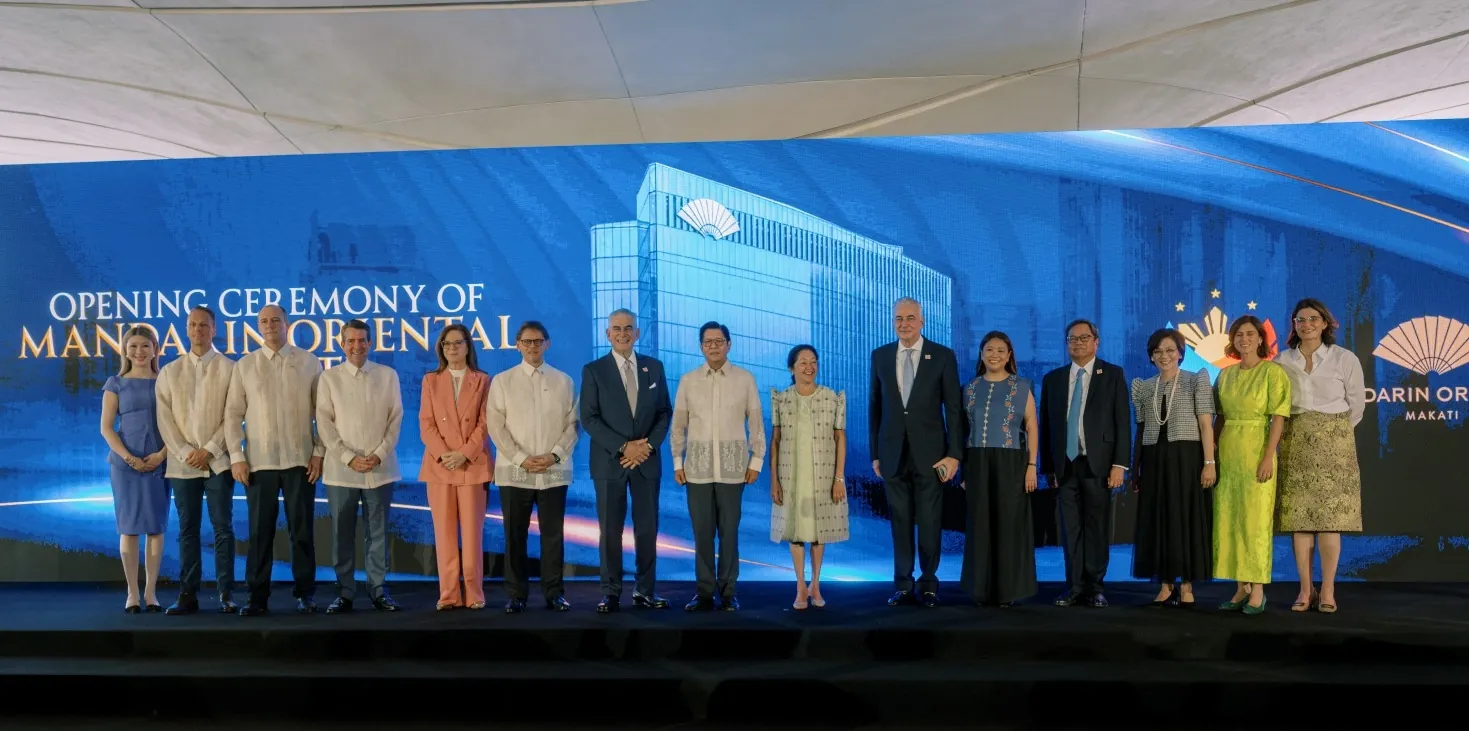
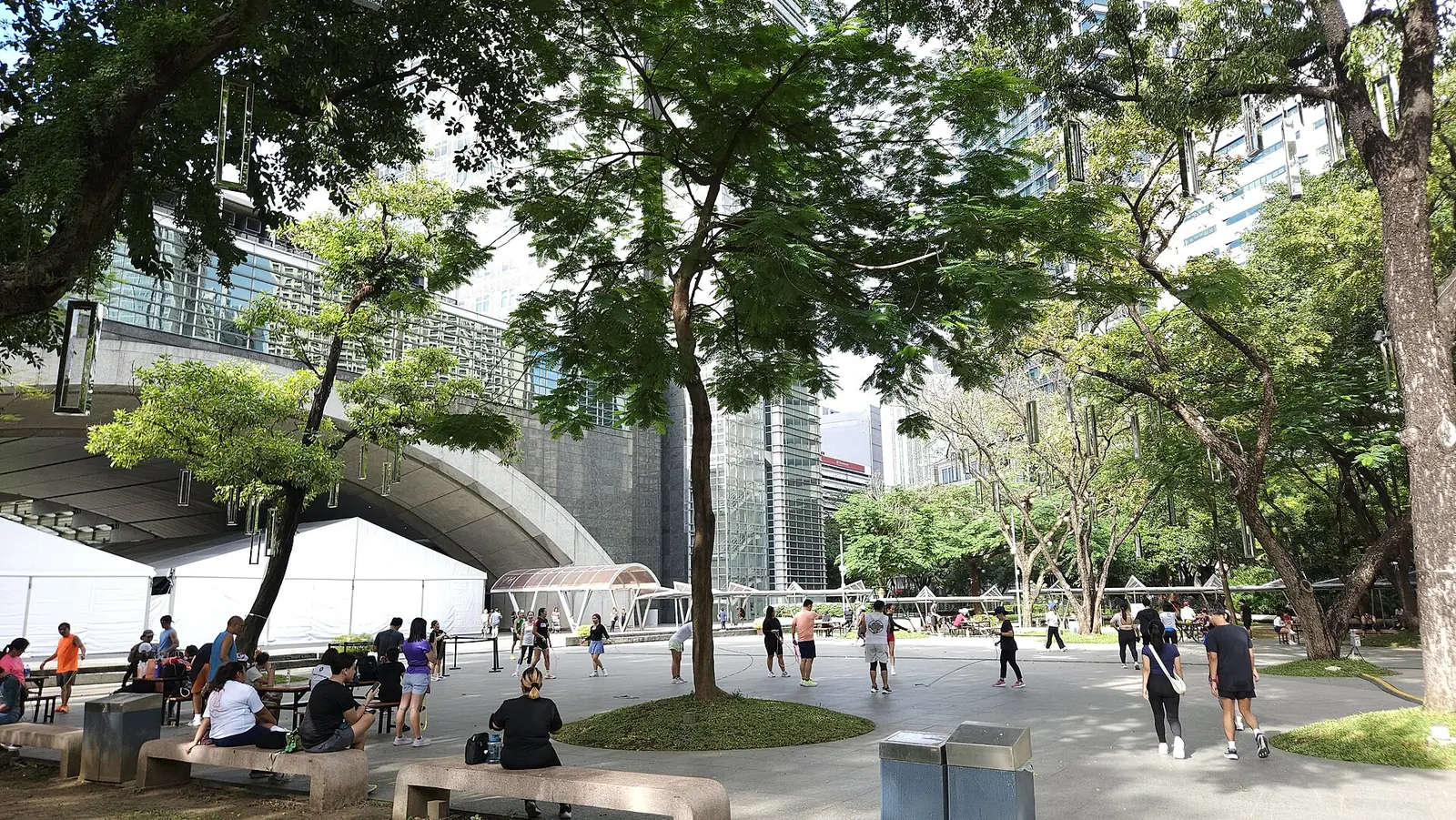
Mandarin Oriental welcomed its first guests in Manila again on November 27, opening a 275-room flagship above Ayala Triangle Gardens in Makati, twelve years after the original Mandarin Oriental Manila closed its doors in 2014. The group marked the return a day early, with an inauguration ceremony on November 26 attended by Ferdinand R. Marcos Jr., President of the Republic of the Philippines, who cut the ribbon alongside Mandarin Oriental's group chief executive Laurent Kleitman and Ayala Corporation chairman Jaime Augusto Zobel de Ayala. The hotel was developed in partnership with Ayala Land, whose family has shaped Makati itself, and the pairing runs through the building: a global brand's service system set inside a development by the family that built the district around it.
The original hotel traded for nearly four decades and held a particular place in the city's life, which the opening programme acknowledged directly. Frank Schuengel had been the last guest to leave the old hotel when it closed in 2014. He came back as the ceremonial first guest of the new one, checked in by general manager Franck Droin and by duty manager Rakko Olivares, the same manager who had seen him out twelve years before. It is the kind of detail a marketing department might invent and a fact-checker would delete; here it is in the group's own release, names and all. Kleitman framed the opening in similar terms, calling Manila a place that occupies "a cherished place in Mandarin Oriental's history" and the return a matter of pride.
Rooms above the gardens
Blink Design Group designed the 275 rooms and suites as what the group calls urban sanctuaries, with views across the skyline and the gardens below, warm materials and handcrafted details by Filipino artisans. Deluxe Rooms measure 50 square metres, which Mandarin Oriental describes as the largest of their category in the city. At the top of the house, the Presidential Suite covers 280 square metres with two bedrooms and more than 200 degrees of panoramic views across Makati. Guests in Club rooms and suites have access to the Mandarin Oriental Club Lounge and personalised services that include 24-hour butler assistance. Throughout the hotel, a commissioned art collection carries the local emphasis further, with works by Filipino artists including Olivia d'Aboville, MM Yu, Jon and Hanna Pettyjohn, Stephanie Comilang and Ryan Villamael.
The wellness offer opens in stages. A 25-metre outdoor pool overlooks Ayala Triangle Gardens from the opening day, while the fitness centre, with Technogym equipment, and the spa, which will combine contemporary therapies with Filipino healing traditions such as hilot, are scheduled to welcome guests from early 2027. Travellers booking the first months should read the opening as a soft completion: the rooms, restaurants and pool are ready, the spa floor is not yet.
Five venues, one archipelago
Dining is where the hotel makes its widest claim on the city. Five venues divide the work. Bi Luo is the Cantonese restaurant, built around handcrafted dim sum, wok dishes and signature roasts, including Peking duck from a dedicated brick oven. Iloy handles all-day dining across local and international cooking. Layara, the evening bar, draws its cocktail programme and sharing plates from across the Philippine archipelago, taking inspiration from the sails of the vinta and the Pangalay dance of the south. Alambik, hidden behind an unassuming entrance, is the speakeasy of the set, built around distillation, rare whiskies, bespoke cocktails and cigars, with reclaimed architectural details and vintage machuca tiles. The Lounge, in the lobby, runs from morning coffee through afternoon tea to evening drinks.
For events, the Grand Hall, a pillar-free room of 740 square metres under an eight-metre ceiling, can take a celebration of 1,000 guests. A Salon handles receptions, and two smaller rooms, The Study and The Studio, take the intimate end of the calendar. The scale matters in Makati, where the hotel competes for the city's corporate and social calendar as much as for its room nights.
What the opening signals
A flagship return of this kind is a considered bet on Manila's top end. President Marcos, in his remarks at the ceremony, welcomed the return as a vote of confidence in the country's tourism sector, and the Ayala partnership gives the bet local ballast: the developer controls much of the surrounding district, including the gardens the hotel overlooks. To mark the opening, the hotel is selling a package it calls A Legendary First Stay, for stays until March 30, 2027, including daily breakfast, airport transfers, a choice of curated experiences and a dining credit of 100 US dollars. Whether Makati's new flagship settles into the role its predecessor held will be decided by the city's own guests as much as by visitors; the building, at least, has been given every advantage of address, scale and memory.
Photography: Mandarin Oriental