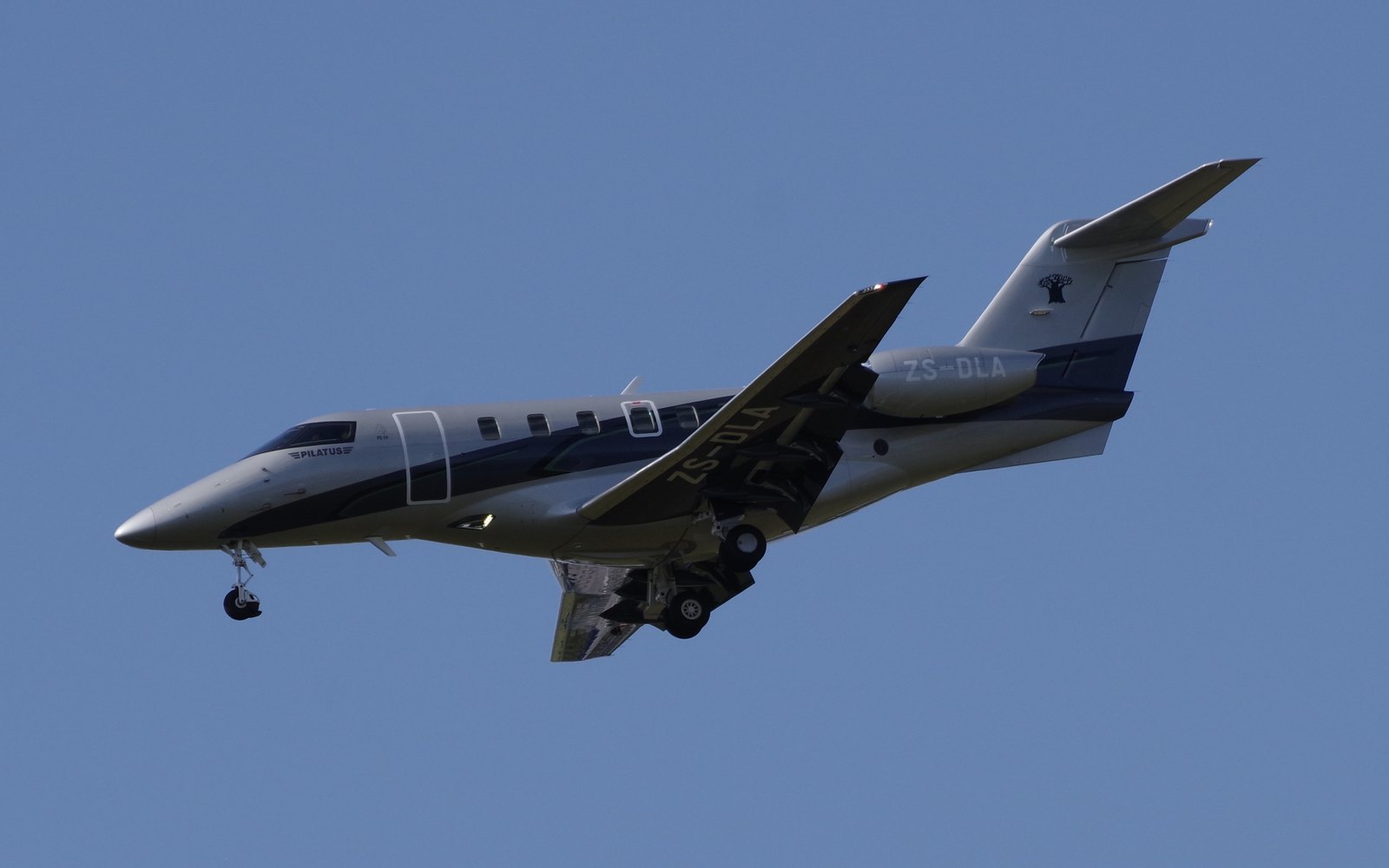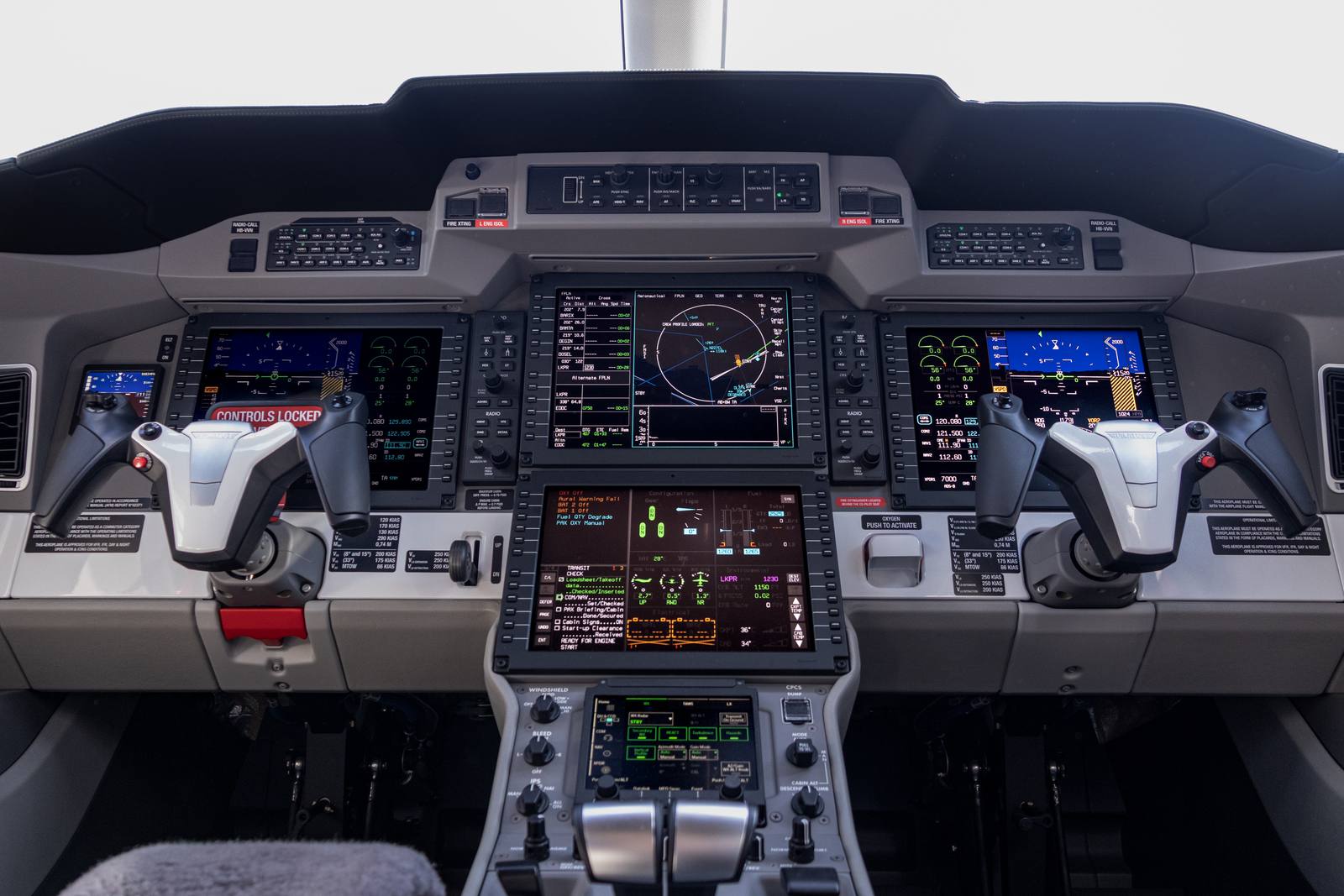
Every business jet brochure promises access. The Pilatus PC-24 is the only one that can put a number on how much of the planet that means: it is the only business jet certified to operate from grass, gravel, sand, and snow, and Pilatus says it opens up nearly twice as many airfields as competing jets. The Royal Flying Doctor Service flies PC-24s into remote strips in the Australian Outback as a matter of routine. In 2026, the French Navy started taking delivery of three leased PC-24s to replace part of its Falcon 10MER fleet, and Spain's air force selected the type in April. A jet that lands where jets should not is having a military moment.
The customer list tells the story. The Royal Flying Doctor Service operates PC-24s across the Australian Outback, where rough-field certification is not a marketing line but a dispatch requirement. Platoon Aviation took its tenth PC-24 in September 2025, building a charter fleet around the type's ability to serve airports its competitors cannot reach. The French Navy's three leased aircraft, replacing Falcon 10MERs, and Spain's 2026 selection extend the same logic to military utility: a jet that lands on 3,000 feet of gravel is useful to air forces too.
The formula is deliberately unglamorous. Two Williams FJ44-4A turbofans, each producing 3,420 pounds of thrust, push the PC-24 to a maximum cruise of 440 knots, with a 45,000-foot ceiling. The balanced field length at maximum takeoff weight is 3,090 feet on a dry paved runway at sea level, and the landing distance over a 50-foot obstacle is 2,410 feet. Those numbers are what let the aircraft use the short, rough strips that keep other jets at the regional airport an hour away.
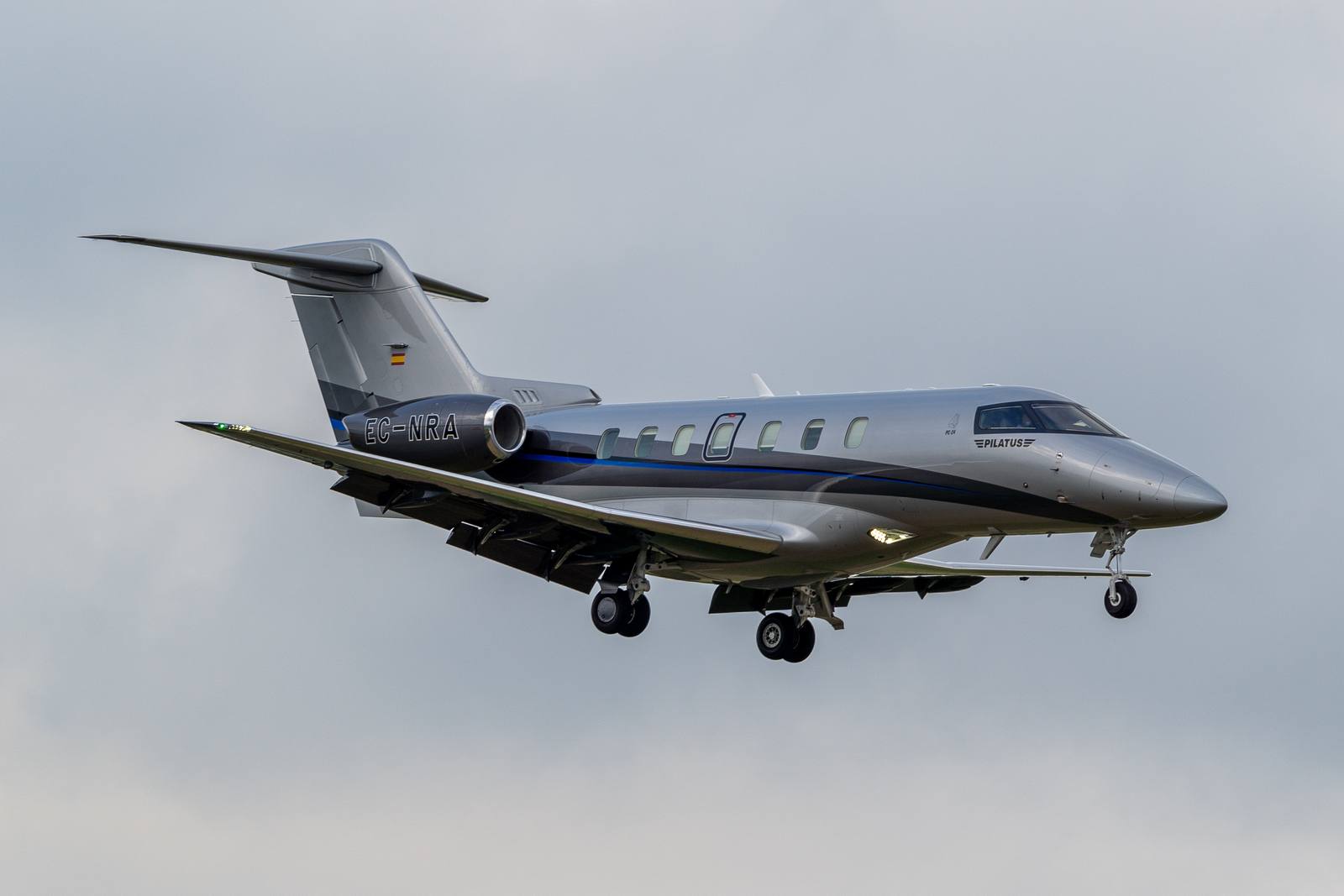
The cabin is where the “Super Versatile Jet” label earns its keep. It is 23 feet long with a continuous flat floor, 5 feet 7 inches wide and 5 feet 1 inch high, for 501 cubic feet of volume, the largest in its class. Ninety cubic feet of baggage space sits in a pressurized compartment accessible in flight, and the standard cargo door measures 4 feet 3 inches by 4 feet 1 inch, large enough to swallow bulky equipment that would never fit through a normal jet door. Seating runs from six to eight in executive layouts up to eleven plus a single pilot, and the aircraft is certified for single-pilot operation.
Pilatus has not left the airframe alone. The “New PC-24,” developed with Lufthansa Technik, came out of a payload-range increase program that shaved empty weight from the wing and fuselage structure while raising maximum takeoff weight, lifting maximum payload to 3,100 pounds and six-passenger range to 2,000 nautical miles (2,040 with four aboard). The interior gained a new cabin management system with a 10-inch touchscreen controller, mood lighting, and USB ports, plus an optional 6-foot-6 divan that converts into a bed, a first in the light-jet class.
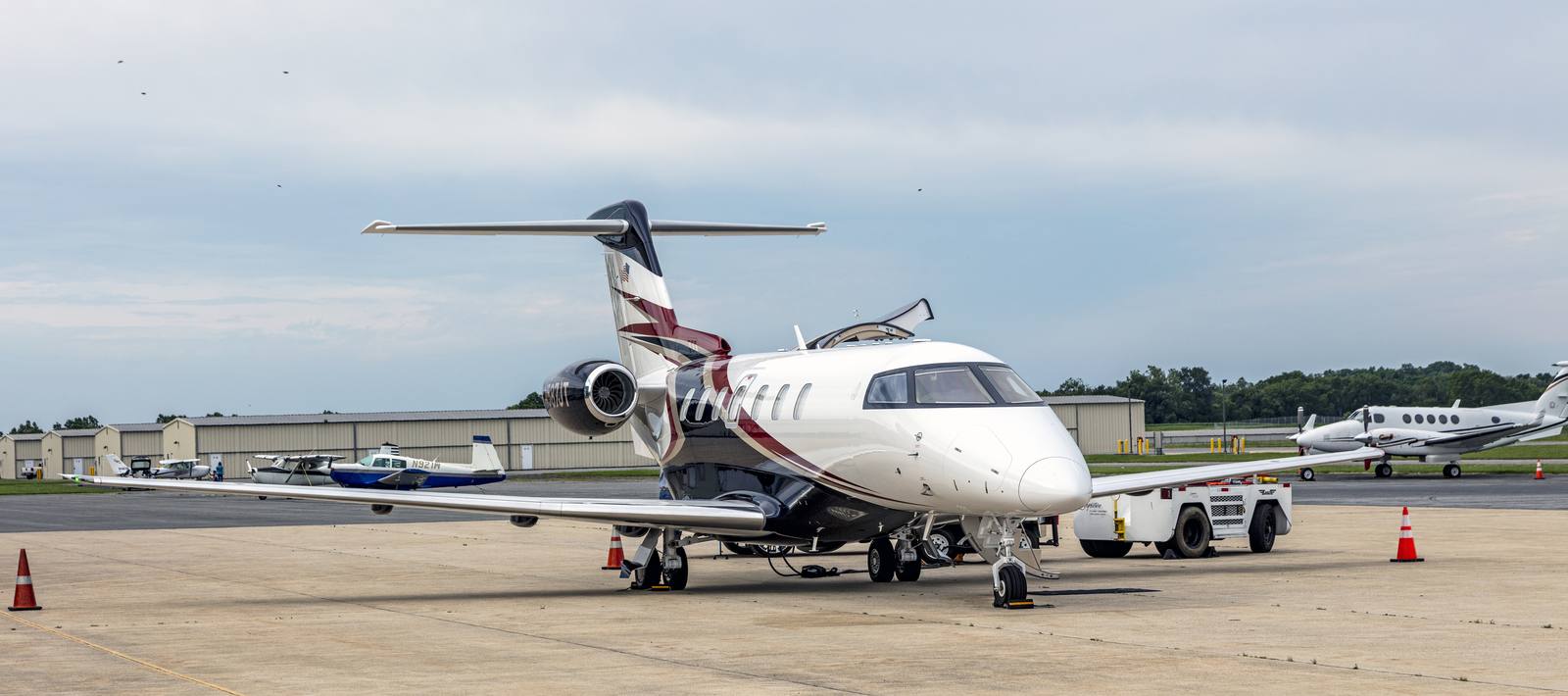
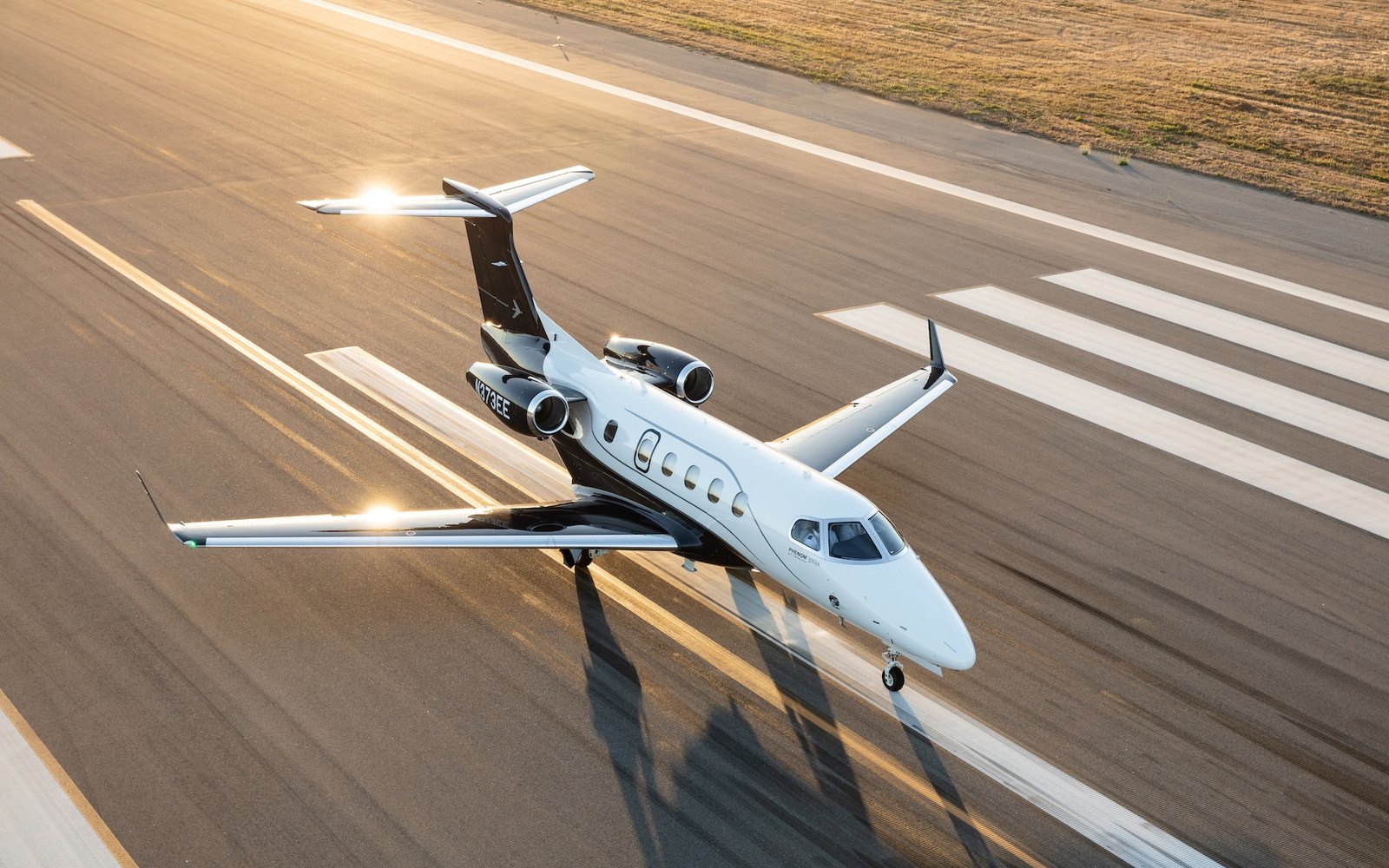
The honest accounting: this is a light jet that asks its passengers to accept light-jet speed and a 5-foot-1 cabin in exchange for going places no other jet can. It will not outrun a Phenom 300, and it will not out-lounge a Praetor. What it does is collapse the last mile. For an operator whose destination is a mine site, a private estate strip, or an island with 3,000 feet of gravel, the PC-24 is not the compromise choice. It is the only choice with a jet door and a lavatory.
The economics follow the capability. Charter pricing sits in the light-jet bracket, yet the aircraft can skip the positioning leg to the nearest jet-capable airport and land at the strip closest to the destination. For a mine site, a private estate, or an island with 3,000 feet of gravel, that last mile is the whole trip, and it is why the order book keeps growing nearly a decade after certification. Single-pilot certification trims crew costs for owner-operators, and the flat-floor cabin converts quickly between passenger, cargo, and medevac layouts, which is why air-ambulance operators keep ordering it.
| Engines | 2x Williams FJ44-4A, 3,420 lbf each |
|---|---|
| Maximum cruise | 440 KTAS (815 km/h) |
| Range, 6 passengers | 2,000 nm |
| Range, 4 passengers | 2,040 nm |
| Ceiling | 45,000 ft |
| Balanced field length (MTOW, sea level) | 3,090 ft |
| Landing over 50 ft obstacle | 2,410 ft |
| Cabin (LxWxH) | 23 ft x 5 ft 7 in x 5 ft 1 in; 501 cu ft |
| Baggage | 90 cu ft, pressurized, in-flight accessible |
| Cargo door | 4 ft 3 in x 4 ft 1 in |
| Seats | 6-8 executive; up to 11 + 1 pilot; single-pilot certified |
| Max payload | 3,100 lb |
| Unpaved ops | Grass, gravel, sand, snow certified |
Photography: New York-air