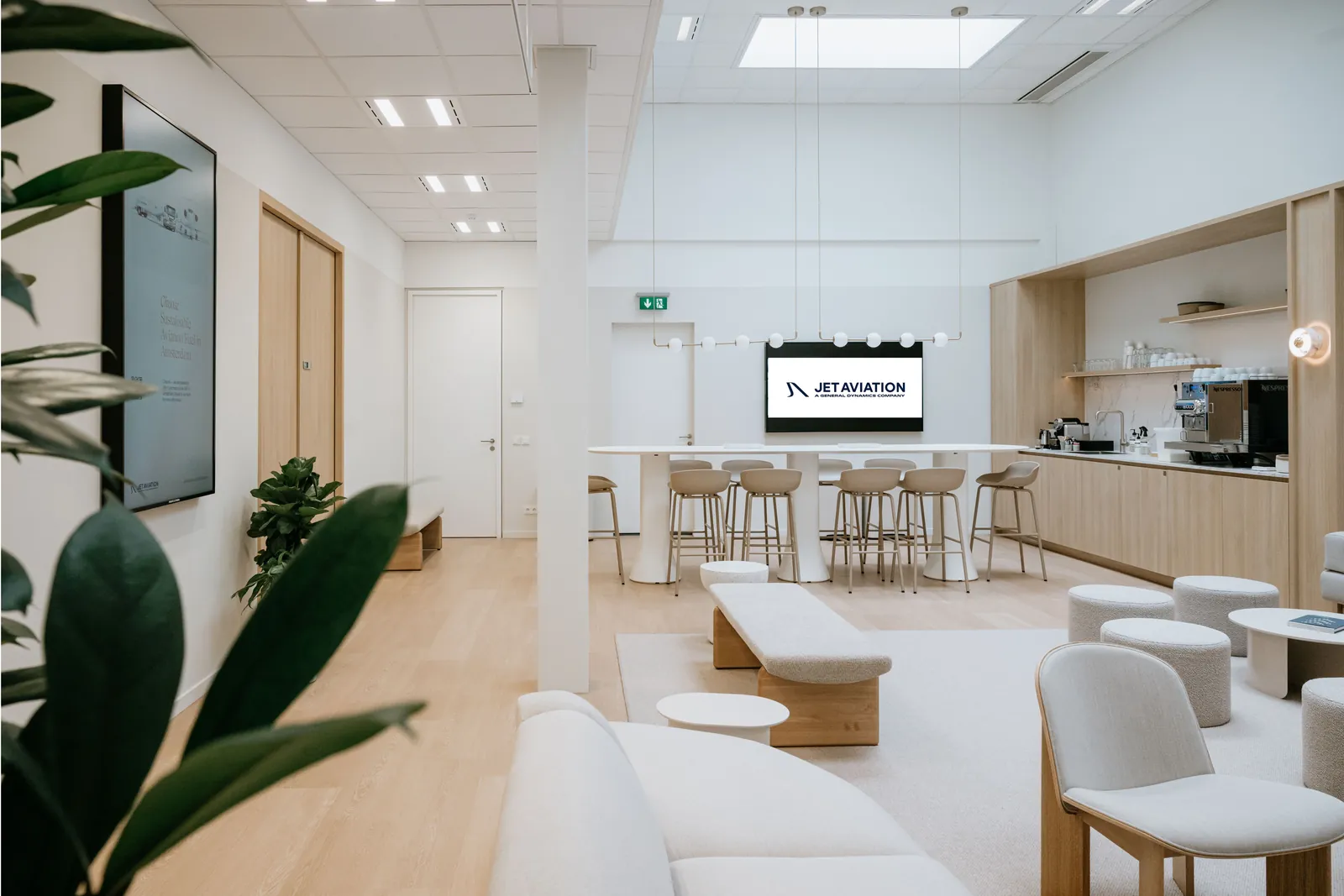
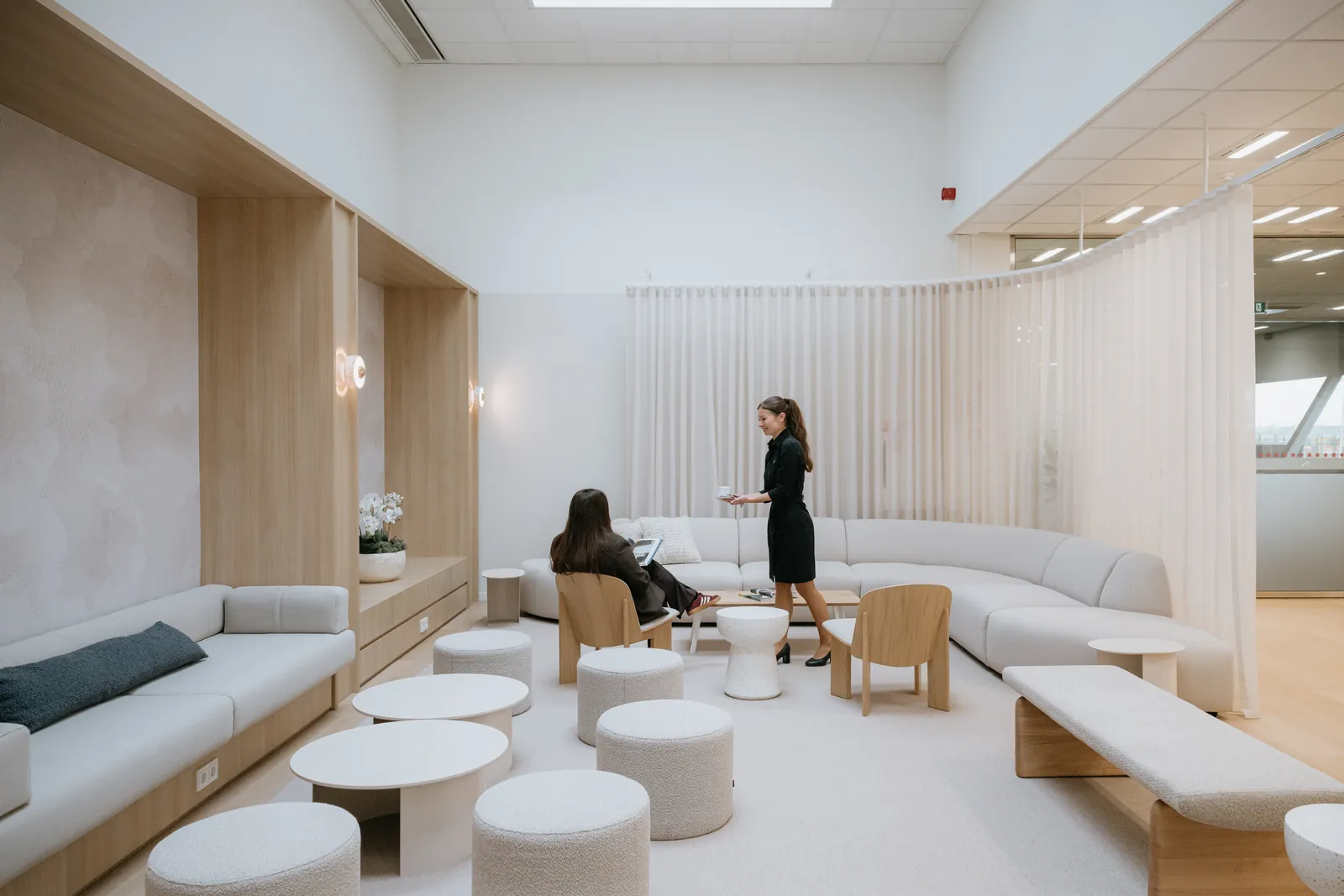
Jet Aviation completed the refurbishment and expansion of its Amsterdam fixed base operation on November 4, adding some 400 square metres to a facility that now totals around 1,000 square metres inside the General Aviation Terminal at Schiphol-Oost. The new space is arranged around the passenger rather than the aircraft: a dedicated lounge with flexible layouts that can take larger groups of travellers, a meeting room built for the purpose, offices that local operators and brokers can work from, and storage space set aside for aircraft based at the field. The FBO sits directly adjacent to the business aviation platform and provides immediate airside access, so the walk from lounge to aircraft stays short.
Amsterdam is a considered place to spend money on ground product. Schiphol is one of Europe's principal business aviation gateways, and its general aviation traffic concentrates in the Schiphol-Oost terminal, where handlers compete on the quality of the rooms passengers wait in and the speed of the turnarounds crews can achieve. "Amsterdam is an important location in our European network and a key business aviation gateway," said Edgar Guerreiro, Jet Aviation's vice president of FBO operations in Europe, describing a network-wide focus on environments that respond to how passengers and crews actually use them.
A lease extension underneath the paint
Underneath the paint sits a longer commitment: Schiphol Real Estate has extended the company's lease in the General Aviation Terminal for several more years, which Jet Aviation frames as a long-term commitment to the Netherlands. Amsterdam joined the Jet Aviation network in 2018, and with Rotterdam forms the Dutch pair in a network of 12 FBOs across Europe, the Middle East and Africa, and some 30 worldwide. The company belongs wholly to General Dynamics and employs more than 5,000 people at 50 locations, across aircraft management, sales, charter, completions, government programmes, FBO services, maintenance and staffing.
The Amsterdam work follows a pattern the company has been building at the station for several years: on-site sustainable aviation fuel was introduced earlier, along with investment in electric ground service equipment and vehicles, before the passenger spaces themselves were addressed. Ricardo Paiva, senior director of site operations, connected the project to the Rotterdam FBO renovation completed in 2025, describing the new Amsterdam spaces as another step in strengthening the company's offering at "two key business aviation gateways in Northern Europe."
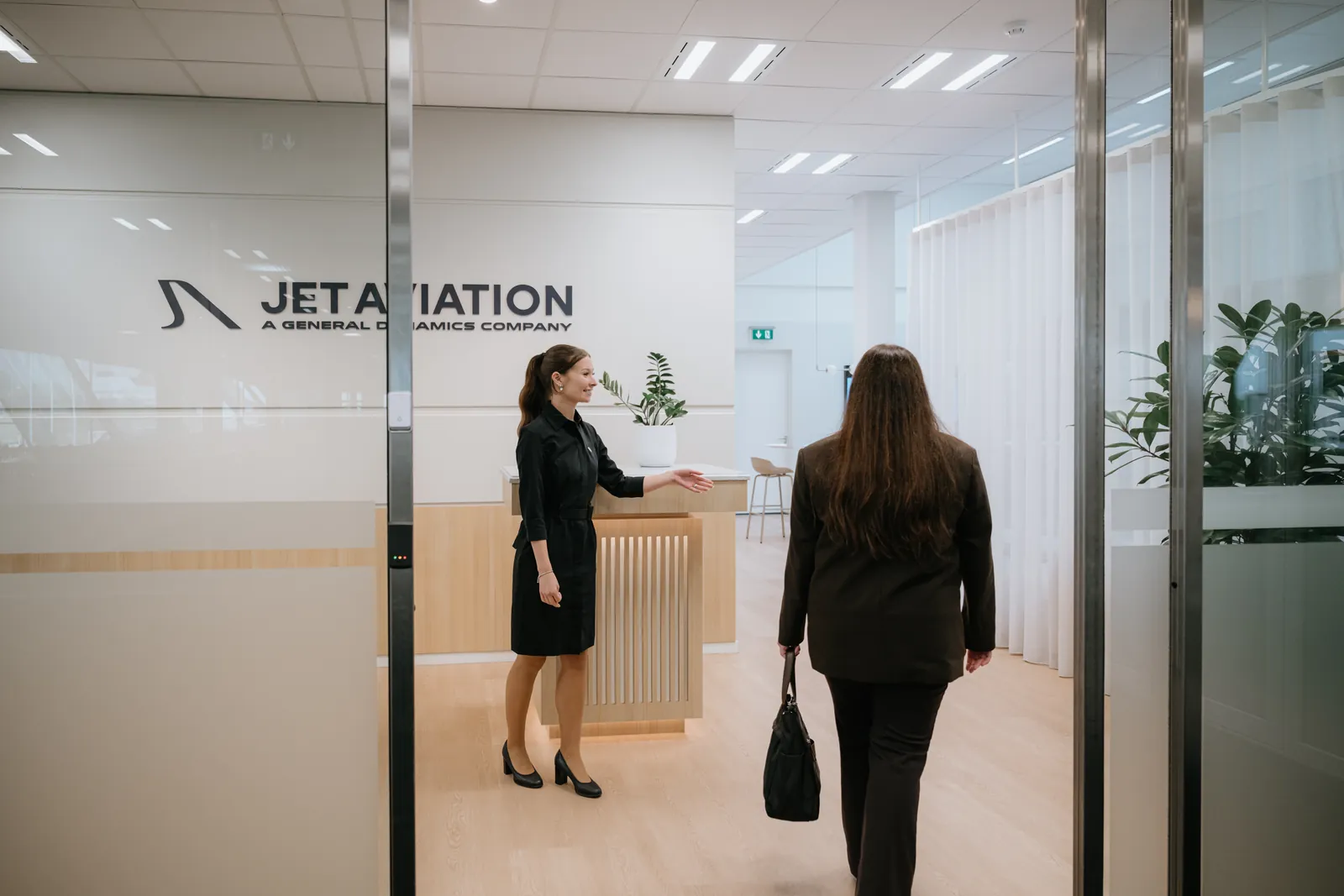
The project took six months to complete, Aviation International News reported, and it renews a facility Jet Aviation first opened at Schiphol in 2018. In imperial terms the addition is about 4,300 square feet, taking the FBO to roughly 10,700 square feet, figures that underline the nature of the work: this is a deepening of an existing station, not a new flag on the map. The investment went into the rooms passengers and crews spend time in, and into the back-of-house space, offices and storage, that determines how smoothly a based operator's day runs.
For a passenger, the changes are specific rather than atmospheric. A lounge that can be rearranged for larger groups answers the charter departure where a dozen people arrive together and previously overflowed a room sized for four. A purpose-built meeting room gives a crew and their passengers somewhere private to wait out a slot delay or finish a conversation that began in the cabin. Storage for locally based aircraft sounds mundane until a based operator's equipment has somewhere permanent to live. None of it photographs as dramatically as a new terminal, and all of it is what frequent users of an FBO actually notice.
Space, not stands
What the expansion does not add is aircraft parking. The 400 square metres are terminal space, lounges, offices and storage inside an existing building, and operators planning Amsterdam trips should still treat stand and hangar availability as a separate question to confirm for their dates. That distinction matters at Schiphol, where the constraint on a busy day is rarely the quality of the lounge. What Jet Aviation has bought with this project is capacity of a different kind: room for larger groups to wait in comfort, a meeting room for the conversations that happen around a departure, and a lease long enough to justify both. For passengers, the change will read as calm rather than spectacle, which is usually the point of a good FBO.
Photography: Jet Aviation